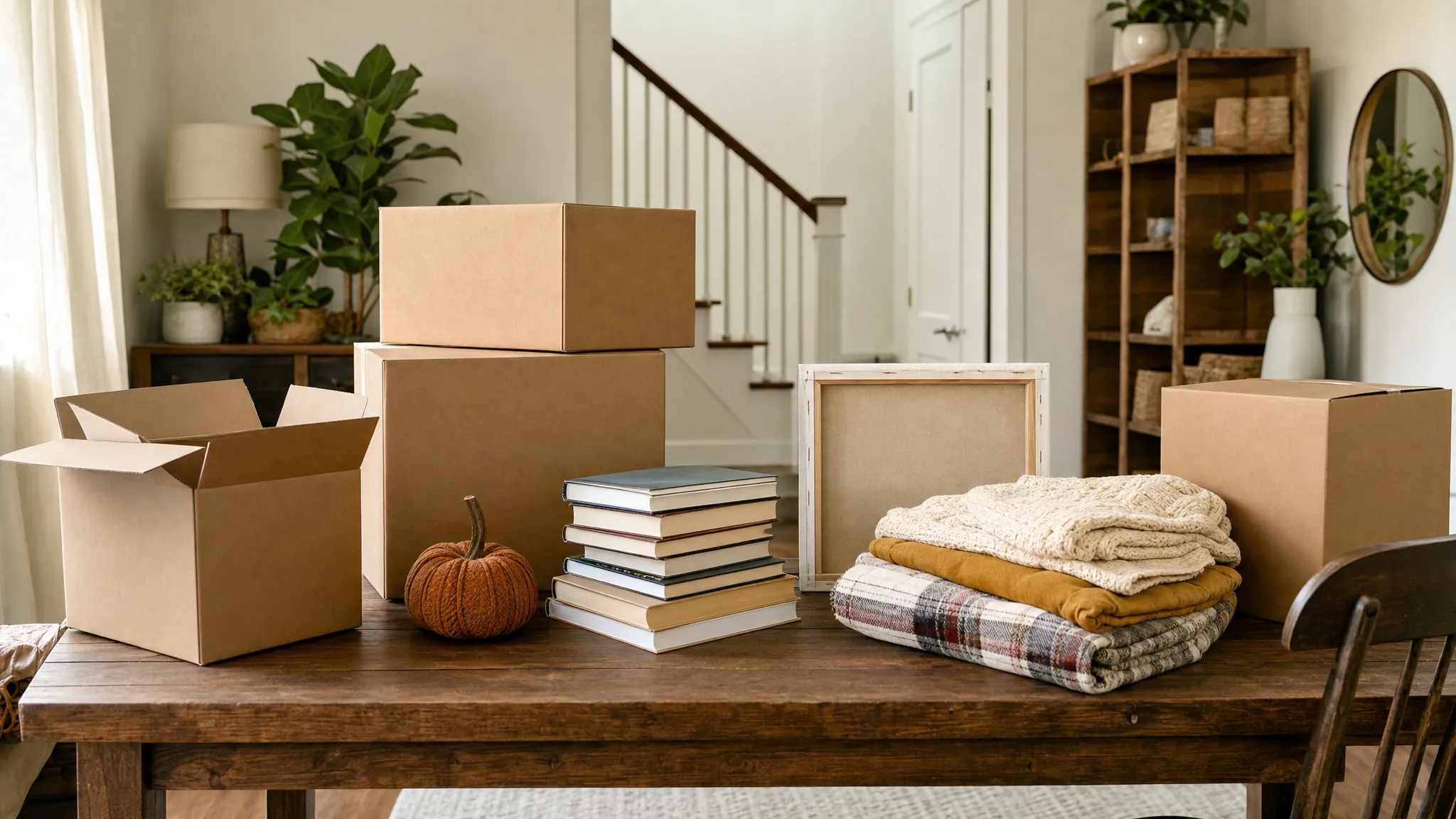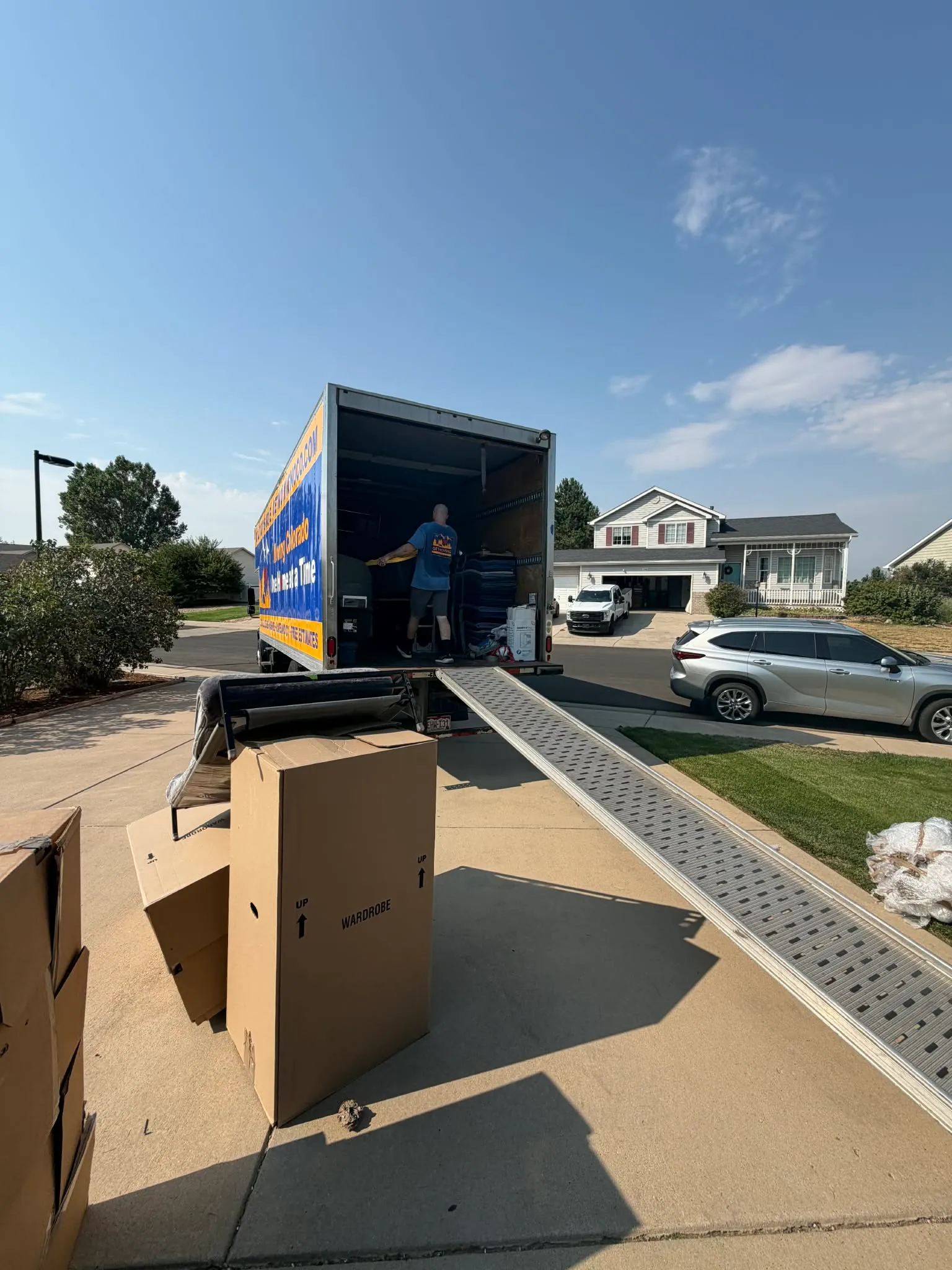

When packing starts without a system, every room turns into a half-finished project. Boxes pile up in doorways, tape disappears when you need it, and the label “miscellaneous” somehow ends up on three different cartons. Organizing your packing does not need a color-coded command center. It needs a simple order that keeps the home usable while helping you see real progress.
The best approach is to give packing supplies one home, work through one area at a time, move completed boxes to one staging spot, and keep the things you still use out of the moving pile. This guide walks through that system so you can pack steadily without making every room harder to live in.
Start with a packing map, not a pile of boxes
Before you begin filling boxes, walk through the home and decide where packing work will happen. Pick one place for supplies and one place for finished boxes. A dining room corner, guest room, empty section of the garage, or part of the living room can work well as long as it does not block the main route through the house.
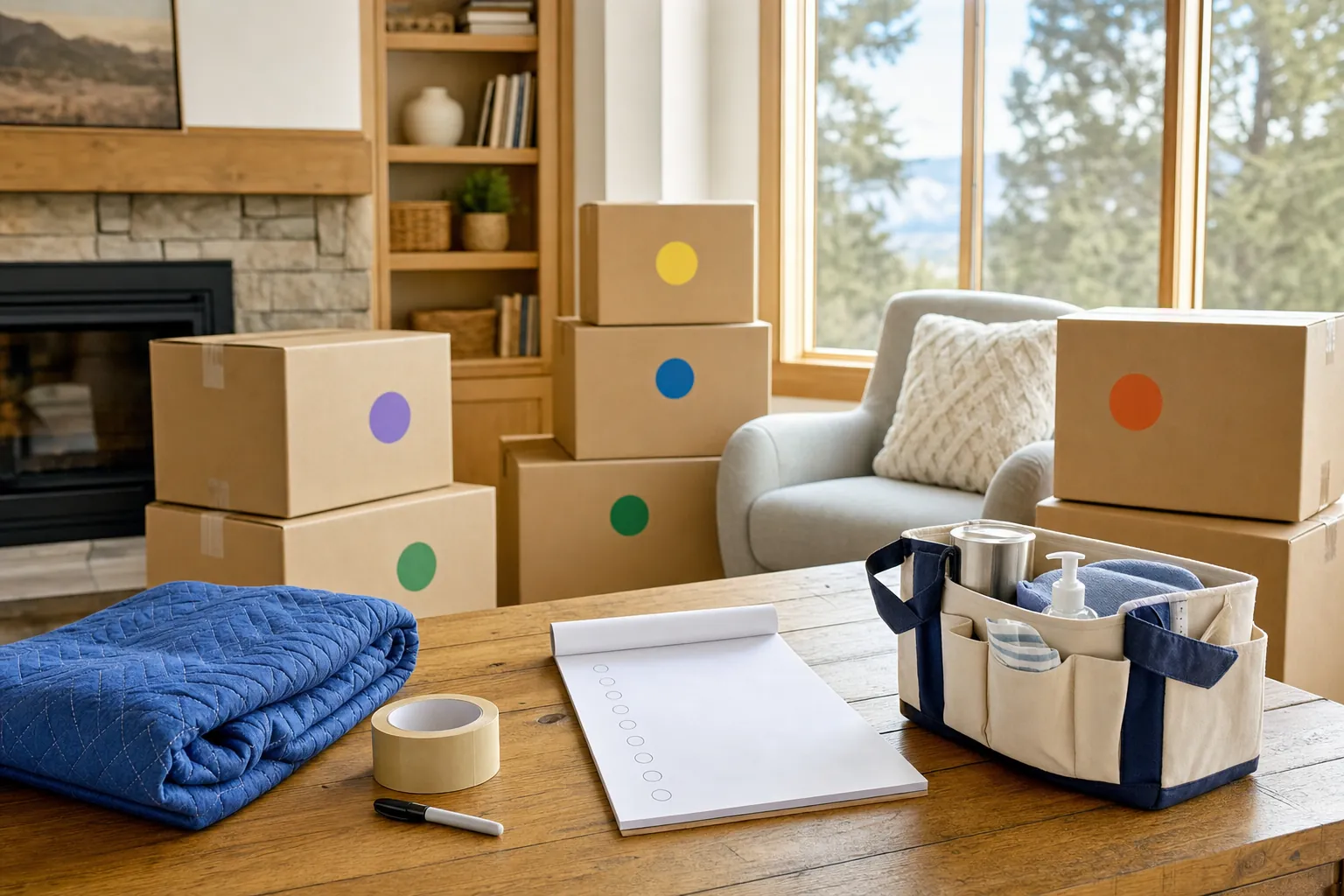
Your supply station should hold the basics: boxes in a few sizes, tape, a marker, labels, packing paper, scissors, and a small trash bag. Keeping those things together stops small interruptions from turning every task into a search. The finished-box area should be close enough to use easily, but far enough from doors, stairs, and hallways that it does not become a trip hazard.
Next, make a quick list of the rooms and spaces that need attention. Include the places people forget because they are not really rooms: the garage, storage closet, laundry area, hall cabinets, shed, home office, and the back of each closet. You do not need to estimate every box. You just need to see the order of the work before you start opening random drawers.
Choose a packing order that protects daily life
A good packing order is based on how often your household uses something. Start with belongings you can live without, then move toward the things you rely on every day. That way you keep seeing progress without finding yourself eating takeout for two weeks because the kitchen was packed too early.
- Start with storage and seasonal items: Holiday decor, out-of-season clothes, books, extra linens, camping gear, old files, and spare furniture are usually easy early wins.
- Move to low-use rooms: Guest rooms, formal dining areas, extra bathrooms, hobby spaces, and shelves of decor can often be packed well before moving day.
- Pack duplicate household items next: Keep one set of towels, a few dishes, basic cookware, and only the toiletries you need for the final stretch.
- Save core daily items for last: Everyday clothing, medication, work or school supplies, chargers, bedding, and kitchen basics should stay accessible until the move is close.
For a more detailed first-room plan, use the guide to what to pack first when moving. If you have several weeks, the six-week packing timeline can help you spread this order across your real calendar.

Sort before you pack each small space
Every item you pack becomes something you have to carry, load, unload, and find a home for later. Do the sorting before the tape comes out. Work one shelf, drawer, cabinet, or closet at a time and make a quick decision: keep it, donate it, recycle it, throw it away, or keep it with you.
Small spaces matter because they keep the decision-making contained. Clearing an entire garage can feel impossible. Clearing one shelf of garden supplies is manageable. Once that shelf is done, you have a finished box, a little more room, and a clear idea of what comes next.
Put donation and discard items in their own clearly separate bags or boxes right away. Do not mix them with packed belongings, and do not promise yourself you will sort them again later. That is how a box of things you meant to leave behind ends up at the new house. For items that should not go in an ordinary moving box, review what not to pack when moving before they get mixed into the load.
Use one box for one clear destination
Room labels make unloading easier, but only when each box has a clear destination. Avoid packing a few kitchen items, some bathroom supplies, and random desk drawers into one “miscellaneous” carton just because they are all nearby. A box can hold different items, but they should make sense together when you open it in the new home.
Good boxes are organized by both destination and use. “Kitchen, baking pans and mixer” is helpful. “Main bedroom, extra linens” is helpful. “Office, files and printer paper” is helpful. “Stuff” is not doing anyone a favor. Write the room name and a short contents note on at least two sides so the label stays visible when boxes are stacked.
Colored stickers can help a room stand out from a distance, especially if several people will be unloading. Use them as a backup, not the entire system. A written label still works when a sticker falls off, boxes get mixed between rooms, or someone has no idea that blue was supposed to mean the upstairs bathroom.
Keep completed boxes in a staging area
A finished box should leave the room where it was packed. Move it to the staging area with the label facing out, and group it with boxes headed to the same room when you can. This makes the house feel less chaotic, keeps work areas clear, and gives you a more accurate picture of what is left.
Keep heavier boxes on the bottom and lighter boxes on top. Do not stack higher than you can safely manage, and leave the path to the main exit clear. If movers will be helping, an organized staging area lets them load efficiently without walking through every room hunting for a finished box.
Do not use your staging area to hide unfinished decisions. A box marked “sort later” is usually just a future problem with tape on it. If you need to pause on sentimental items, paperwork, or a complicated project, set aside one small, clearly labeled decision box and come back to it on a specific day. That is much better than letting a dozen half-filled boxes collect around it.
Give yourself a realistic packing target
Packing stays organized when the daily target is small enough to finish. Rather than promising to “do the garage” on Saturday, choose a shelf, one closet, a kitchen cabinet, or one category of clothing. Finish that area, move the boxes to the staging spot, and then decide whether you have time for another small section.
This approach also makes it easier to share the work. One person can sort books, another can wrap dishes, and another can label and stage the completed boxes. Give every helper one defined job and a clear place to put finished work. Several people opening separate closets at once usually creates more piles, not more progress.
Plan short sessions around the parts of the day that already work for your household. Thirty focused minutes after dinner can move a packing plan forward more reliably than waiting for an entire free weekend. A smaller target keeps you from pulling out half a room, getting interrupted, and returning later to a bigger mess than you started with.
Make a simple inventory for the things that matter
You do not need a spreadsheet for every mug and towel. An inventory is most useful for the categories that are hard to replace, easy to lose, or likely to be needed soon after the move. That includes electronics, jewelry, important documents, photo albums, collectibles, tools, small hardware, and the contents of storage areas.
Take a quick photo of a shelf or open box before you close it if that will help you remember what is inside. For a box with cables, remotes, screws, or small furniture parts, place the pieces in a labeled bag and keep that bag with the item it belongs to. One photo and one label can save a lot of time when you are setting up the new home.
Keep a short list of the boxes that need to be opened first: kitchen basics, everyday clothes, bedding, bathroom supplies, work equipment, and children’s or pet essentials. Those boxes deserve an “open first” note and should be easy to find when the truck is unloaded.
Organize the rooms that tend to get messy
Some spaces need more structure because they hold several kinds of belongings. Give those rooms their own focused session instead of treating them like a quick closet.
Kitchen
Pack specialty appliances, serving dishes, cookbooks, extra mugs, and pantry items you will not use first. Keep only enough dishes, utensils, and cookware for simple meals. Group food, glassware, and cooking tools separately so boxes stay balanced and make sense when you open them.
Home office
Pack archived papers, reference books, spare supplies, and equipment you will not need before the move. Keep current work, important files, chargers, and the devices you use daily in a small separate area until the end. Take a photo of cable connections before unplugging anything that has to be reassembled quickly.
Garage, shed, and storage
Start with a sorting pass. Group hand tools, garden items, seasonal gear, and project supplies before you pack them. Use small sturdy boxes for heavy tools and hardware. Keep anything that needs special disposal or separate handling out of the general moving pile, rather than discovering it after the rest of the garage is boxed.

Set aside an essentials zone before the final week
The best-organized packing plan still needs a place for things that should not be packed into the truck. Create one tote, suitcase, or clearly marked corner for keys, identification, medications, important documents, chargers, glasses, toiletries, basic cleaning supplies, and anything your household needs on the first night.
Add to it as you think of things. Include towels, bedding, snacks, water, toilet paper, paper towels, a power strip, trash bags, and a small tool kit. Families may need pet supplies, school items, or favorite comfort items. The point is not to fit everything into one bag. It is to stop the first night from becoming a search through stacked boxes.
For a full move-day list, the moving packing checklist breaks down what to keep separate and what to confirm before the crew arrives. If you are moving a larger home or need help arranging the whole plan, start early with a free estimate request and share the rooms, access details, and timing that matter.
Bring in help for the parts that slow everything down
Organizing a move does not mean you have to pack every room on your own. Kitchens, garages, fragile collections, large furniture, and tightly scheduled moves can take much longer than expected. It is reasonable to handle the straightforward rooms yourself and bring in help for the work that needs more time, care, or hands.
Get Moving can provide full or partial packing help for the whole home, selected rooms, or fragile items. Once the home is ready, the team can handle local residential moving, or provide loading and unloading help when you already have a rental truck, storage unit, or moving container.
Organizing early gives you more choices. You can decide what to keep, what to pack, and where to ask for help before moving day turns those decisions into a rush.
Frequently asked questions
What is the best way to organize packing for a move?
Set up one supply station, sort one small space at a time, and move finished boxes to a single staging area. Label at least two sides with the destination room and a short contents note. Start with the things you use least and keep daily essentials separate until the end.
Should I pack room by room or by category?
Use a mix of both. Work room by room so the house stays manageable, but pack categories together when they make more sense, such as books, seasonal decor, office files, or kitchen appliances. The important part is giving each finished box one clear destination room.
How do I keep boxes organized after they are packed?
Keep completed boxes in one staging area away from main paths, with labels facing outward. Group them by destination room when possible, put heavier boxes on the bottom, and do not stack boxes so high that the labels disappear.
What should I leave unpacked until moving day?
Keep out the daily clothing, medications, important documents, chargers, keys, basic toiletries, pet supplies, a few dishes, bedding, and the supplies you need for the first night. Put those items in a clearly separate tote or bag.