A moving packing checklist turns one large, messy project into a series of smaller jobs you can actually finish. The goal is not to get every box packed as early as possible. It is to make steady progress while keeping the home usable, keeping the important items visible, and avoiding a frantic final night.
Use this checklist in order, then adjust it to your timeline. A small apartment may move through the steps quickly. A family home with a garage, storage area, home office, or several packed rooms may need more time. Either way, the same approach works: sort before packing, start with low-use items, label clearly, and keep the first-night essentials out of the pile.
1. Set up one packing station
Before opening boxes in every room, choose one place for supplies. A dining-room corner, guest room, or clear section of the garage works well. Keep boxes, tape, markers, paper, labels, scissors, and a small trash bag together. When supplies have a home, you do not lose ten minutes every time you need another roll of tape.
Pick a second spot for completed boxes. It should be out of the main walkway and easy for movers to reach later. Keeping finished boxes together makes the home feel less chaotic and gives you a visible record of progress. It also makes it easier to see which rooms still need attention. Leave an open path through the home, especially near stairs and doorways.
- Use small boxes for books, tools, and other dense items.
- Use medium boxes for most kitchen, closet, and household items.
- Use large boxes for lightweight things such as linens, pillows, and lampshades.
- Keep a marker and tape at the station, not in the last box you packed.
2. Sort before you pack
Every item you pack becomes something you have to lift, load, unload, and put away. Start with a simple decision: keep it, donate it, recycle it, throw it away, or move it separately. You do not need to solve every sentimental decision in one afternoon. You do need to keep items you are not taking from taking up box space.
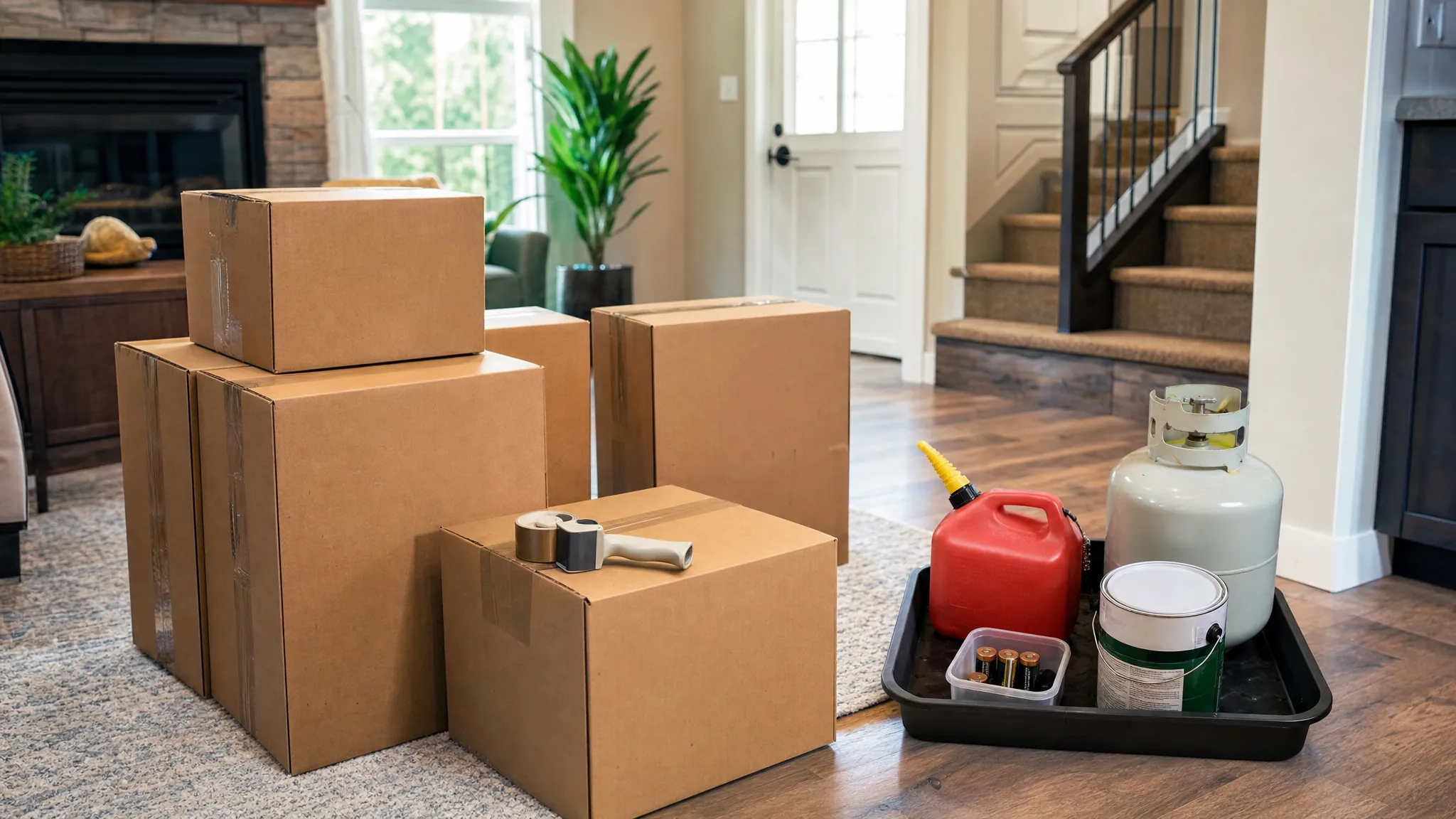
Work one shelf, drawer, or closet at a time. Make the call, then move on. The best first targets are storage areas, decor, old files, duplicate kitchen tools, clothing that is out of season, and anything that has not been used in a year. For household products, perishable food, valuables, and other items that need special handling, use our guide to what not to pack when moving before they get mixed into ordinary boxes.

3. Pack in an order that keeps life working
Start with the things your household can live without. This is where most packing plans either work or fall apart. Packing your everyday kitchen, work supplies, and bedding too early makes the home harder to live in. Start with the least-used things, then move toward daily items as moving day gets closer.
Start first
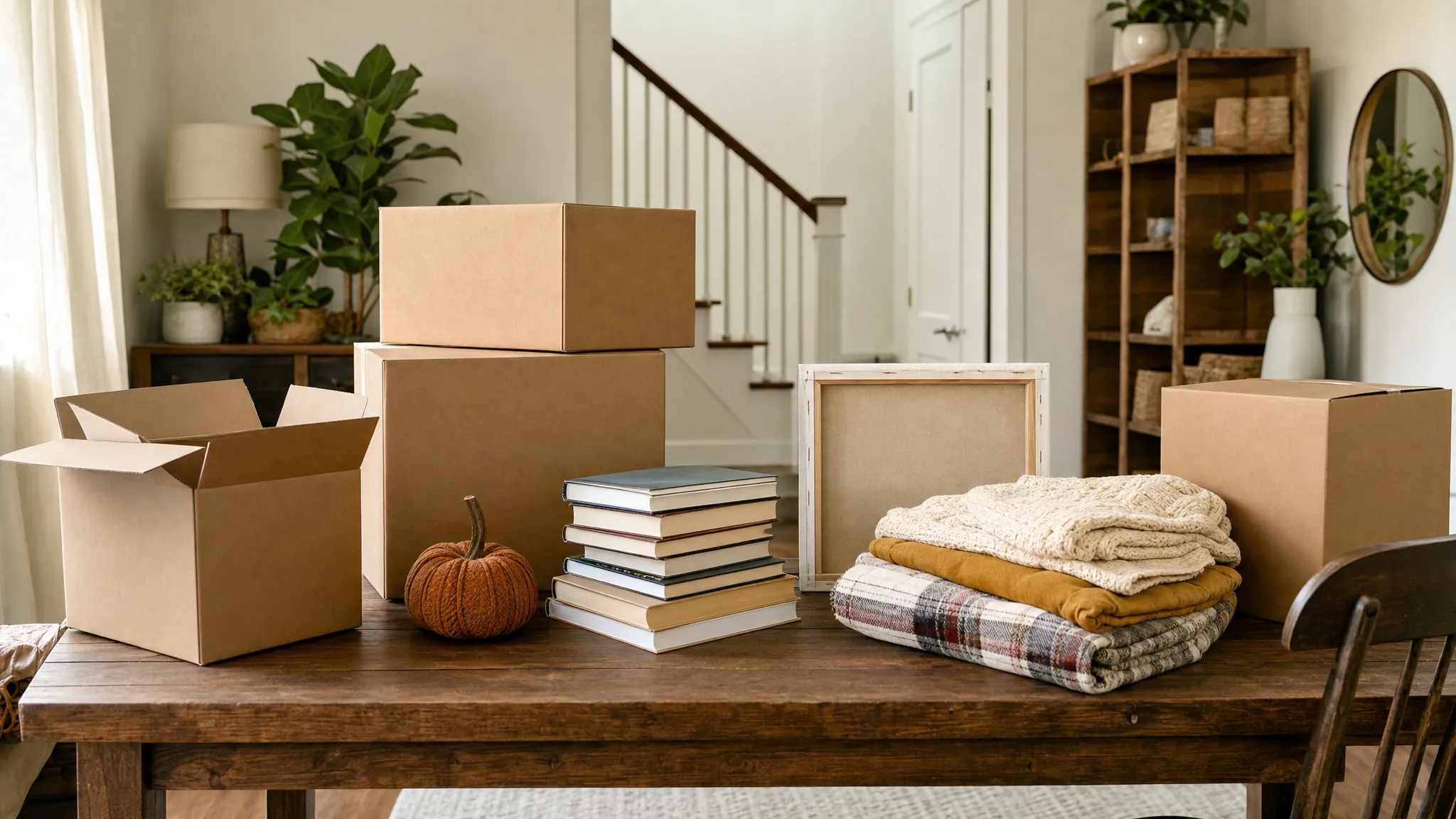
Pack holiday decor, books, framed art, spare linens, guest-room items, hobby supplies, off-season clothes, storage shelves, and extra furniture. These boxes create room and momentum without disrupting your day.
Pack next
Move to extra dishes, specialty appliances, most of the pantry, backup toiletries, wall decor, files you do not need this week, and the rooms you can partly close off. If you need a room-by-room place to start, use the guide to what to pack first.
Save for last
Keep out the daily clothing, basic cookware, medication, toiletries, work and school items, pet supplies, phone chargers, bedding, and the things you need for the first night. These should never be buried in a box that disappears into the truck.
4. Protect fragile and heavy items properly
Good packing is about keeping items stable, not using the most paper. Wrap fragile pieces individually, fill gaps in the box so they cannot shift, and keep the box light enough to carry safely. Plates, glasses, electronics, lamps, and small decor need padding and a clear label. Do not stack heavy items on delicate pieces simply because they fit.
Books, tools, canned goods, and other dense items belong in smaller boxes. A large box full of books may be technically packed, but it creates a difficult lift and can tear through the bottom. Use the right size box, reinforce it with tape when needed, and keep similar items together where it makes sense.
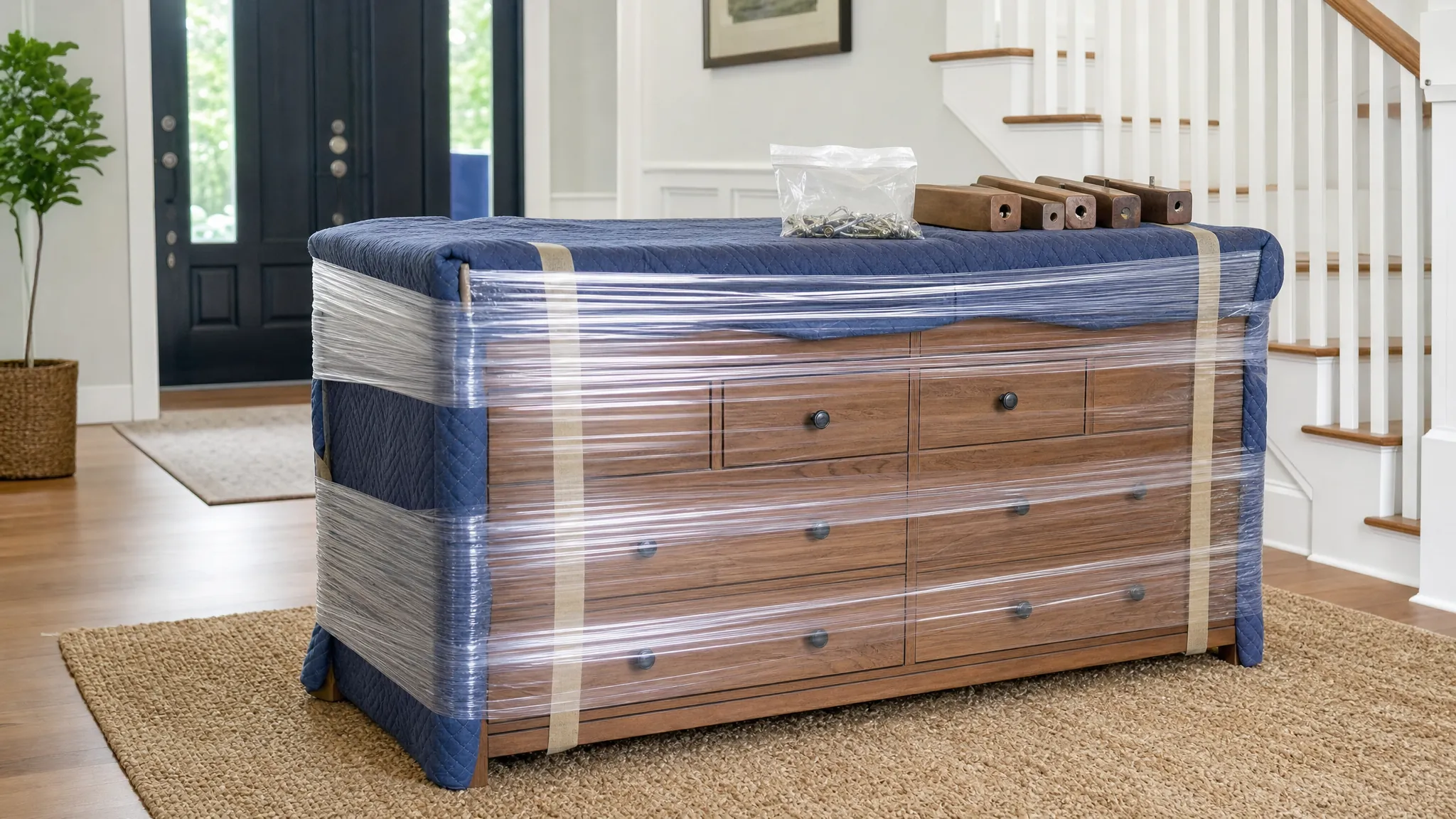
Furniture needs its own plan. Clean and empty pieces before they are wrapped, remove only the parts that make moving safer, and keep hardware in labeled bags. Our furniture packing guide covers the order for padding, wrapping, and preparing large pieces for the truck.
5. Label boxes so unloading makes sense
Label boxes on at least two sides, not only the top. Movers and helpers often see the side first when boxes are stacked. Include the destination room and a short contents note. “Bathroom, towels and hair dryer” tells you much more than “Bathroom.” For boxes that need extra care, add a simple note such as “Fragile,” “Open first,” or “Keep upright.”
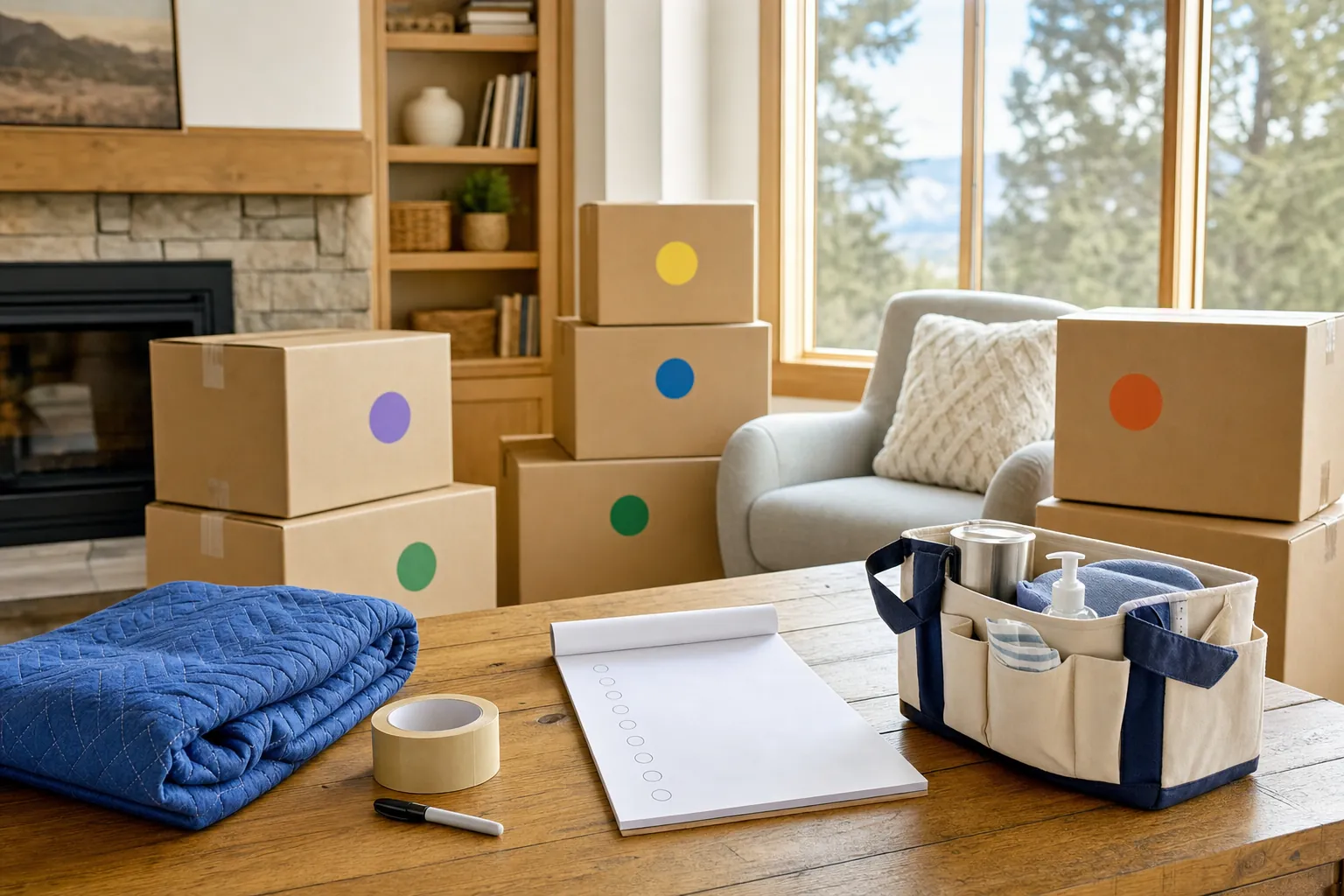
A color dot can help each room stand out from a distance, but it should support a written label rather than replace it. The best labeling system is the one everyone can understand without asking. Keep rooms named consistently. If the room is called “main bedroom” at the new home, do not label some boxes “bedroom,” others “master,” and others “upstairs.”
6. Work through the rooms that slow people down
Some rooms take longer because they hold more than one kind of item. A kitchen has food, glass, appliances, and cleaning supplies. A garage can have tools, seasonal equipment, old projects, and household products that do not belong in the truck. A home office can have papers, chargers, electronics, and work you still need before the move. Give these rooms their own block of time instead of treating them like an ordinary closet.
Kitchen checklist
Pack serving dishes, specialty appliances, cookbooks, extra mugs, and pantry items you will not use first. Keep only the few plates, cups, pans, and utensils your household needs for simple meals. Use up food from the freezer and refrigerator as moving day gets closer. Wrap glasses and dishes individually, fill the gaps in the box, and avoid overloading one box just because it is full of small things.
Bathroom checklist
Pack spare towels, backup toiletries, extra cleaning cloths, and the items in the back of cabinets. Keep out your regular medications, daily toiletries, toothbrushes, and a towel for the final night. Check with your moving company before boxing cleaners, aerosols, or products that could leak. Those are easier to handle when you identify them early rather than finding them in the cabinet the morning of the move.
Garage and storage checklist
Sort the garage before you buy boxes for it. Set aside donations, recycling, and anything that requires separate disposal. Group tools together, use small sturdy boxes for hardware and hand tools, and make a note of any large equipment or furniture that will need extra care. Storage units deserve the same approach: take an inventory, decide what is going to the new home, and keep the items you will need first near the front.
7. Make a separate essentials tote
Your essentials tote is the box or bag that does not get treated like a normal moving box. It stays with you or is loaded last and unloaded first. Put in the things that would be annoying, expensive, or stressful to search for after a long day.
- Keys, identification, important documents, medications, glasses, and jewelry.
- Phone chargers, a power strip, basic toiletries, toilet paper, and paper towels.
- Water, snacks, a few disposable plates or cups, and any needed pet supplies.
- A clean towel, bedding, pajamas, and one change of clothes for each person.
- A utility knife, small tool kit, trash bags, and basic cleaning supplies.
Keep this tote separate from the personal bags that travel in your vehicle. The tote handles the first night in the home. Your personal bag handles the things you cannot afford to misplace during the move itself.

8. Confirm the details outside the boxes
A move has tasks that will not fit in a carton. Confirm parking, building rules, elevator reservations, key pickup, utility timing, and access codes before the final week. If you are leaving an apartment or condo, check the building requirements early so a move-in window or loading rule does not surprise you on moving day.
Give yourself time for address updates, too. The USPS mail-forwarding service lets you arrange mail forwarding before your move. Make a short list of the accounts and services that need the new address, then work through it during the weeks before the move instead of relying on memory afterward.
9. Finish the day-before checklist
On the day before moving day, walk each room slowly. Check closets, cabinets, drawers, the laundry area, the garage, outdoor spaces, and the refrigerator. Set aside anything that travels with you. Make sure boxes are closed, labeled, and not so heavy that they are hard to move.
Clear the route from rooms to the front door or truck. Roll up rugs that slide, make a place for pets to stay safely out of the way, and keep the essentials tote visible. If weather is involved, have towels or a simple floor-protection plan ready. The goal is to make the crew’s route straightforward and protect both the home and the people carrying the boxes.

10. Ask for help before the list becomes overwhelming
It is normal for one or two rooms to take far longer than expected. Kitchens, garages, packed closets, fragile collections, and large furniture can turn a manageable list into a late-night project. The useful question is not whether you can technically do it all. It is whether doing it all yourself is the best use of the time you have left.
Get Moving offers full and partial packing help for the whole home, selected rooms, fragile belongings, and the parts of a move that are hardest to fit around work or family life. When the boxes are ready, the local residential moving crew can handle the loading, transport, and unloading. If you have the truck or portable container arranged already, loading and unloading help can cover the heavy work.
For a clear plan around your actual timeline, use the free estimate request and share the rooms, access details, and items that need extra care. The right plan can be a full move, help with the packing list, or simply a capable crew for moving day.
Frequently asked questions
What should I pack first for a move?
Start with storage areas, seasonal belongings, decor, books, extra linens, and other items your household will not need before moving day. That creates early progress without packing away the things you still use every day.
How early should I start packing for a move?
Start as soon as your move is certain. Six weeks is a useful timeline for many households, but a larger home, garage, storage unit, busy family schedule, or lots of sorting can call for an earlier start.
What should go in a moving-day essentials box?
Keep toiletries, medications, important documents, chargers, keys, towels, bedding, water, snacks, paper towels, toilet paper, a small tool kit, and anything your household needs on the first night separate from the moving truck.
How should I label moving boxes?
Label at least two sides of each box with the destination room and a short contents note. A label such as “Kitchen, baking pans and mixer” is more useful than simply writing “Kitchen” once boxes are stacked.