When you are looking at a full home, the hard part is not knowing how to put things in boxes. It is knowing where to begin without making your everyday life impossible. The simplest answer is this: pack the things you use least, then work toward the things you use every day.
That order gives you a visible win early, clears out the clutter that makes packing feel bigger than it is, and leaves your important routines intact. You can still make coffee, find your shoes, and get everyone out the door while the packed boxes quietly add up.
Start with storage, seasonal items, and anything you forgot you owned
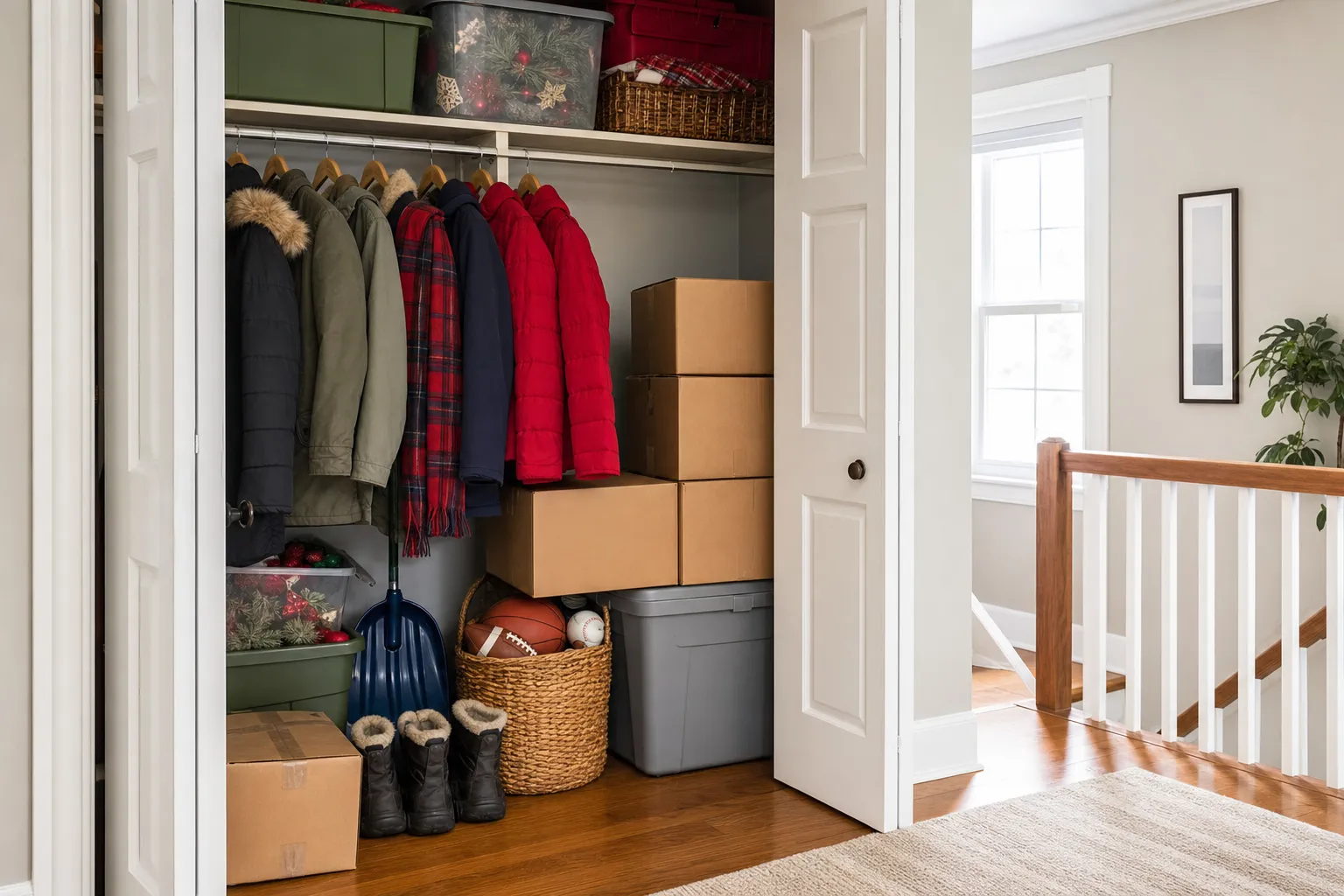
Begin in the places that already hold the things you do not need regularly: the attic, basement, garage, closets, cabinets above the refrigerator, and the back of the linen closet. Storage areas are often the easiest first target because they contain clear categories, and clearing them gives you space to stage finished boxes.
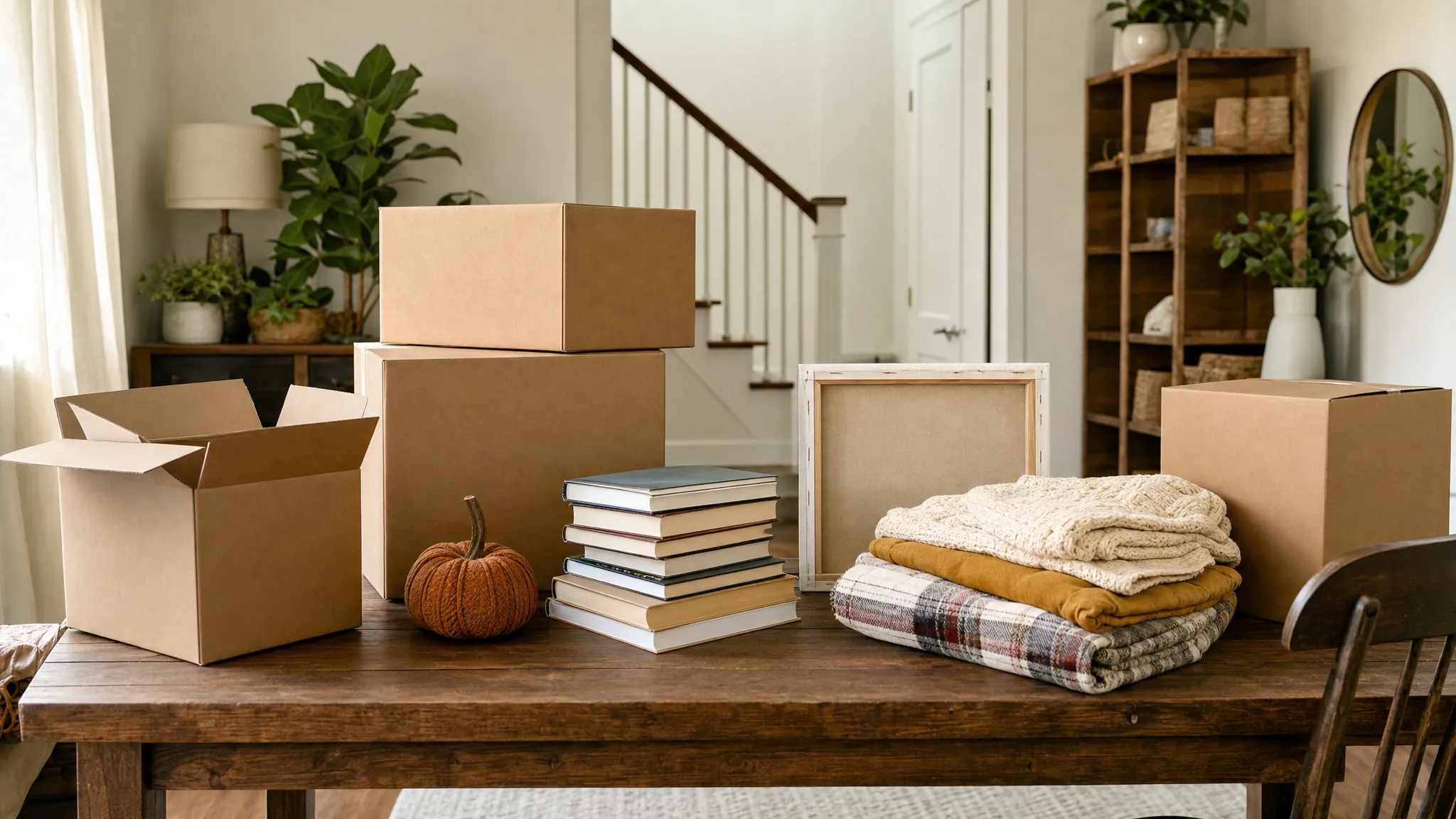
Pack holiday decor, off-season clothing, sporting equipment, extra bedding, spare towels, camping gear, hobby supplies, old files you need to keep, and decorative items. Books and framed art are also early-pack items for most homes. They take time to wrap and box, but you can live without them for a while.
Do not treat this as a race to fill boxes. Pick one category at a time, make a quick donate-or-discard decision, and then pack what is staying. Fewer things going into the new home means fewer things to unload, put away, and trip over later.
Pack by how often you use a room
After storage, move through the home from least-used spaces to most-used spaces. A guest room, formal dining room, home office, or extra bathroom can usually be packed well before your main bedroom or kitchen. The exact order will be different in every household, but the principle stays the same: protect the daily routine until you are close to move day.
A simple order looks like this:
- Storage spaces and seasonal gear: These should go first because they are low-disruption and often take up more space than expected.
- Guest rooms, decor, books, and wall art: Keep out only what you still need for daily life or for a scheduled visitor.
- Extra linens, backup toiletries, and duplicate kitchen items: One set is enough for the final stretch. Pack the extras.
- Home office and hobby areas: Keep current work, school, and essential equipment accessible. Pack archived papers, reference books, surplus supplies, and anything not needed before the move.
- Main bedroom and kitchen: These come later. You can begin sorting them early, but save your core daily items for the final days.
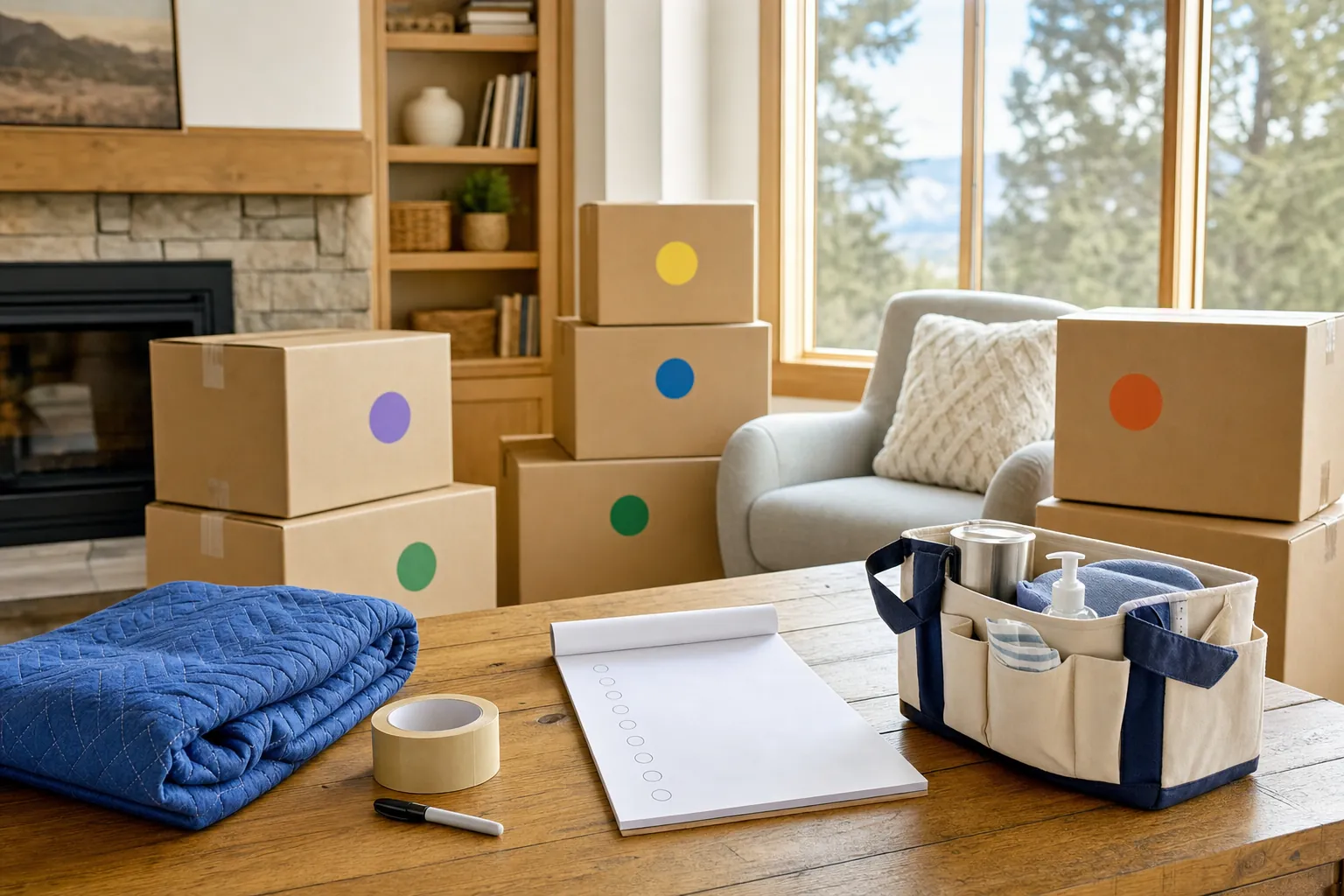
Give each finished box a room name and a short contents note. “Kitchen” is helpful. “Kitchen, baking sheets and mixer” is far more useful when you are looking for one thing after a long day. Put the label on two sides, not just the top, so it stays visible after boxes are stacked. You can add a color sticker by room, but do not rely on color alone. A written note still helps when boxes are separated, stacked in a garage, or unloaded by someone who did not do the packing.
Set up one packing station and keep it simple
Searching for tape, scissors, and a marker every time you start a box makes packing feel far more tiring than it needs to be. Set aside one small area for the supplies you use most: boxes in a few sizes, packing paper or bubble wrap, tape, a marker, labels, and a utility knife stored safely out of reach of children.
Bring only the materials you need into the room you are working on. That keeps the space from turning into a supply pile and makes it easier to see what still needs attention. For fragile items, line the bottom of the box, wrap each piece before it goes in, and add enough cushioning so nothing can move when the box is gently shifted. Fill a box firmly, but do not force it closed or make it too heavy to carry comfortably.
A small packing station also gives everyone in the house a clear place to return items. That matters when more than one person is helping. One person can sort, another can wrap, and another can label without leaving half-finished boxes scattered through every room. If you would rather skip the materials and the wrapping, Get Moving's packing service can take on the whole house or just the rooms that need more care.
Sort before you pack, especially in the kitchen and garage
Packing is a natural point to decide what is worth carrying into the next home. Keep the decision small and fast. If something is broken, expired, duplicated, or no longer fits your life, do not spend time wrapping it just because it is in front of you.
The kitchen is a common place to lose time. Start by packing serving dishes, specialty appliances, cookbooks, extra glassware, and the pans you rarely use. Keep a short list of the tools you need for simple meals, then box those in the final week. The garage deserves the same treatment: group hand tools, garden equipment, and project supplies by type before packing. This makes it easier to spot loose items and keeps small parts from disappearing into a random box.
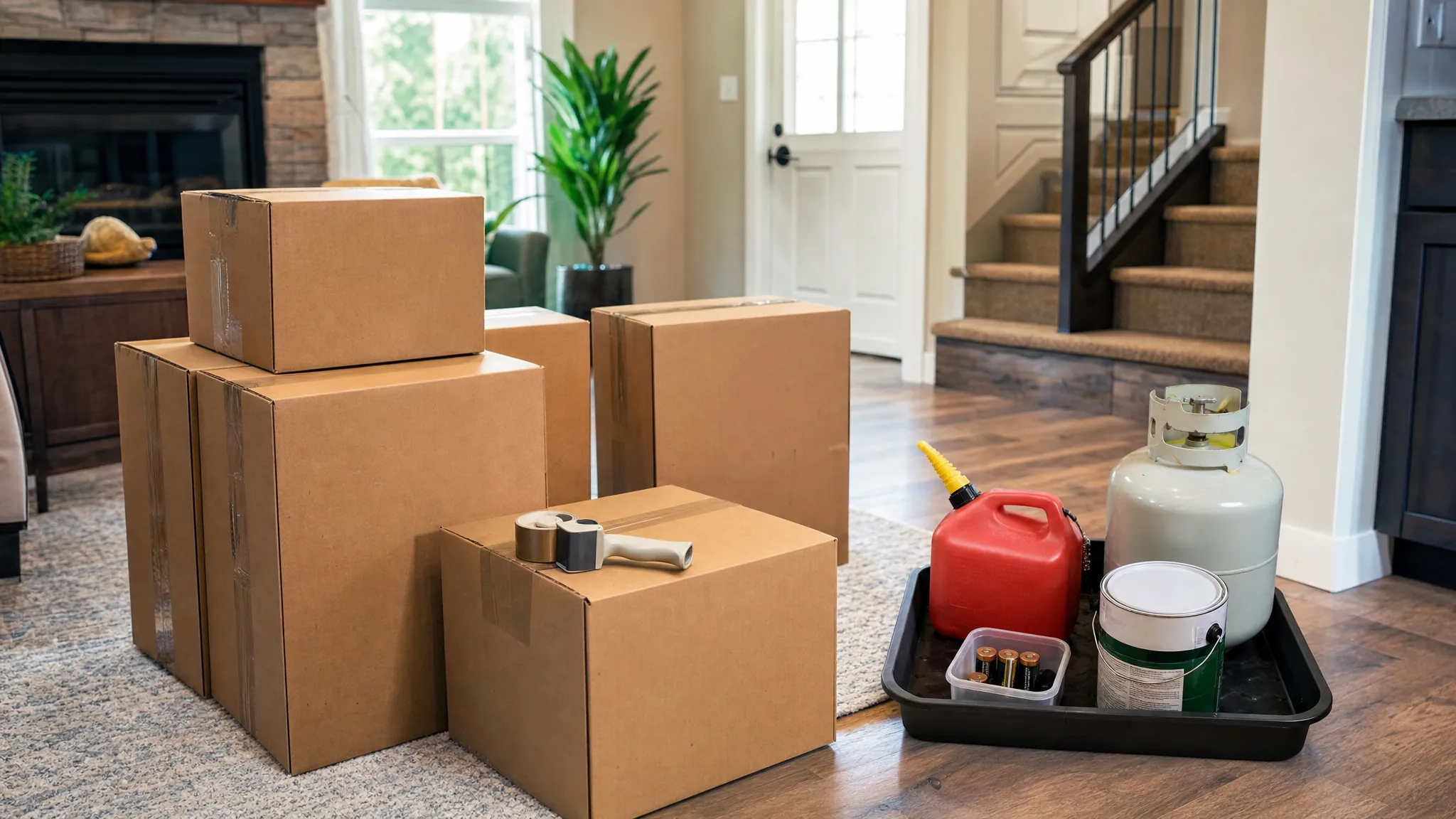
Be careful with items that are not safe or practical to put on a moving truck. For local households, the Larimer County Household Hazardous Waste Facility guidance is a useful place to check disposal options for products such as flammable liquids, batteries, chemicals, and certain paints. Do not leave those decisions for move morning.
Make an essentials box before you need it
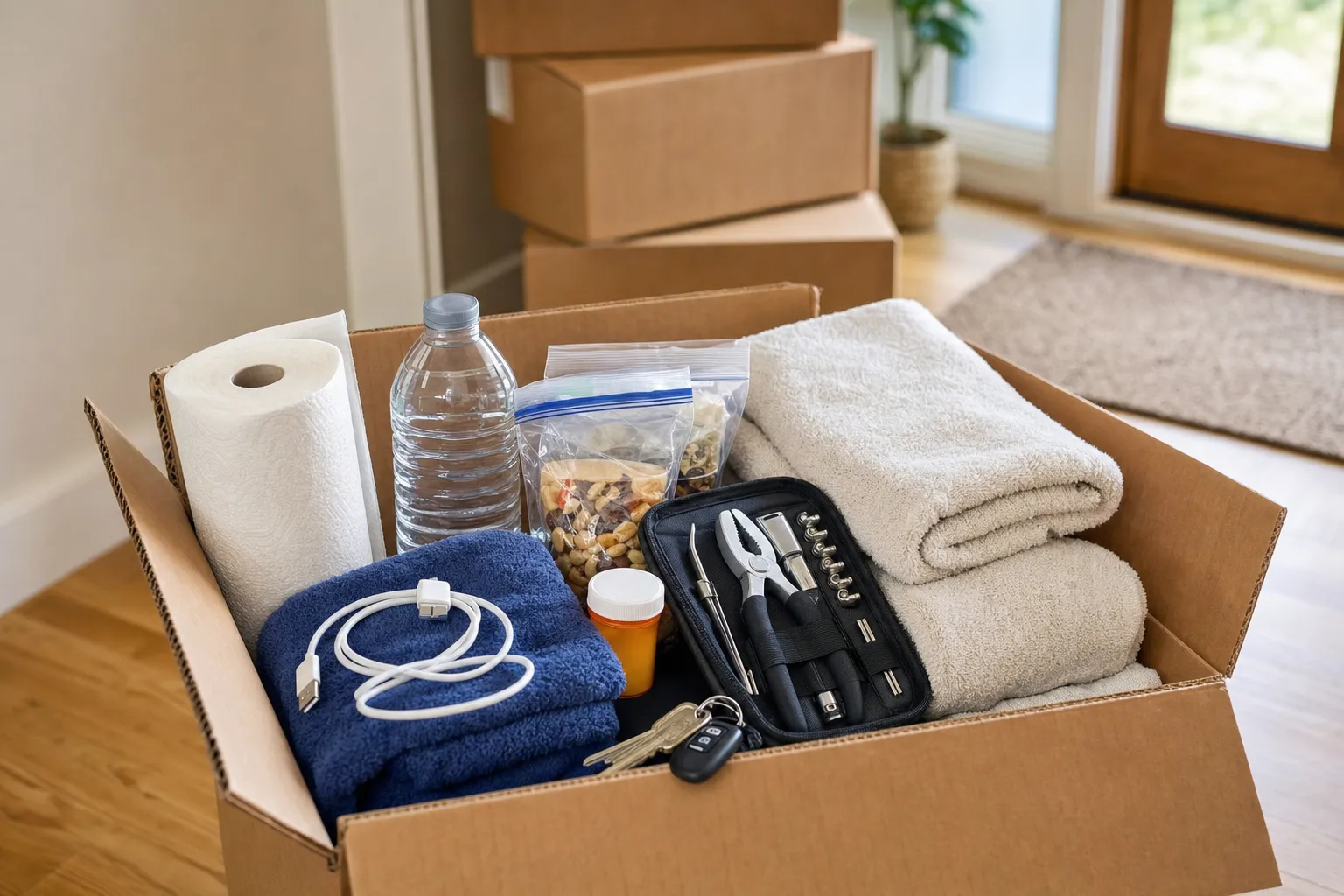
The last things you pack should be the things you will want first. Make one clearly separate box or bag for the first night and the first morning. Keep it with you, or make sure it is the last box loaded and first box unloaded.
Your essentials box can include medications, important documents, chargers, keys, paper towels, toilet paper, a basic tool kit, snacks, water, towels, bedding, a change of clothes, and a few cleaning supplies. Families may want to add pet supplies, favorite kid items, and enough dishes for an easy meal. If you work from home, include the equipment you need to be available the next day.
Do not pack irreplaceable paperwork into a general box. Bring identification, closing documents, insurance information, prescriptions, and valuable small items with you. The same is true for a phone charger and basic medications. Those are not things you want to search for after the truck is empty.
Use a simple countdown instead of one huge packing weekend
A packing plan works better when it has a finish line for each week. If you have several weeks, start with one closet, one shelf, or one room at a time. The goal is steady progress, not a perfect house full of matching boxes.
- Three to four weeks out: Clear storage areas, pack seasonal belongings, start donations, and box books, decor, and guest-room items.
- Two weeks out: Work through less-used rooms, extra linens, hobby equipment, most wall art, and backup kitchen items. Confirm what furniture will move and what will not.
- One week out: Pack most clothing, prepare the kitchen for simple meals, finish nonessential rooms, and set aside your essentials box.
- One to two days out: Box the remaining kitchen items, everyday toiletries, and last clothes. Check cabinets, drawers, laundry areas, and outdoor spaces for stragglers.
If your move is happening sooner, keep the same order and shorten the timeline. Start with storage and low-use belongings, then work through the rooms you can close off. Even a quick move gets easier when you stop deciding what to pack every time you touch an item.
Protect the things that are hardest to replace
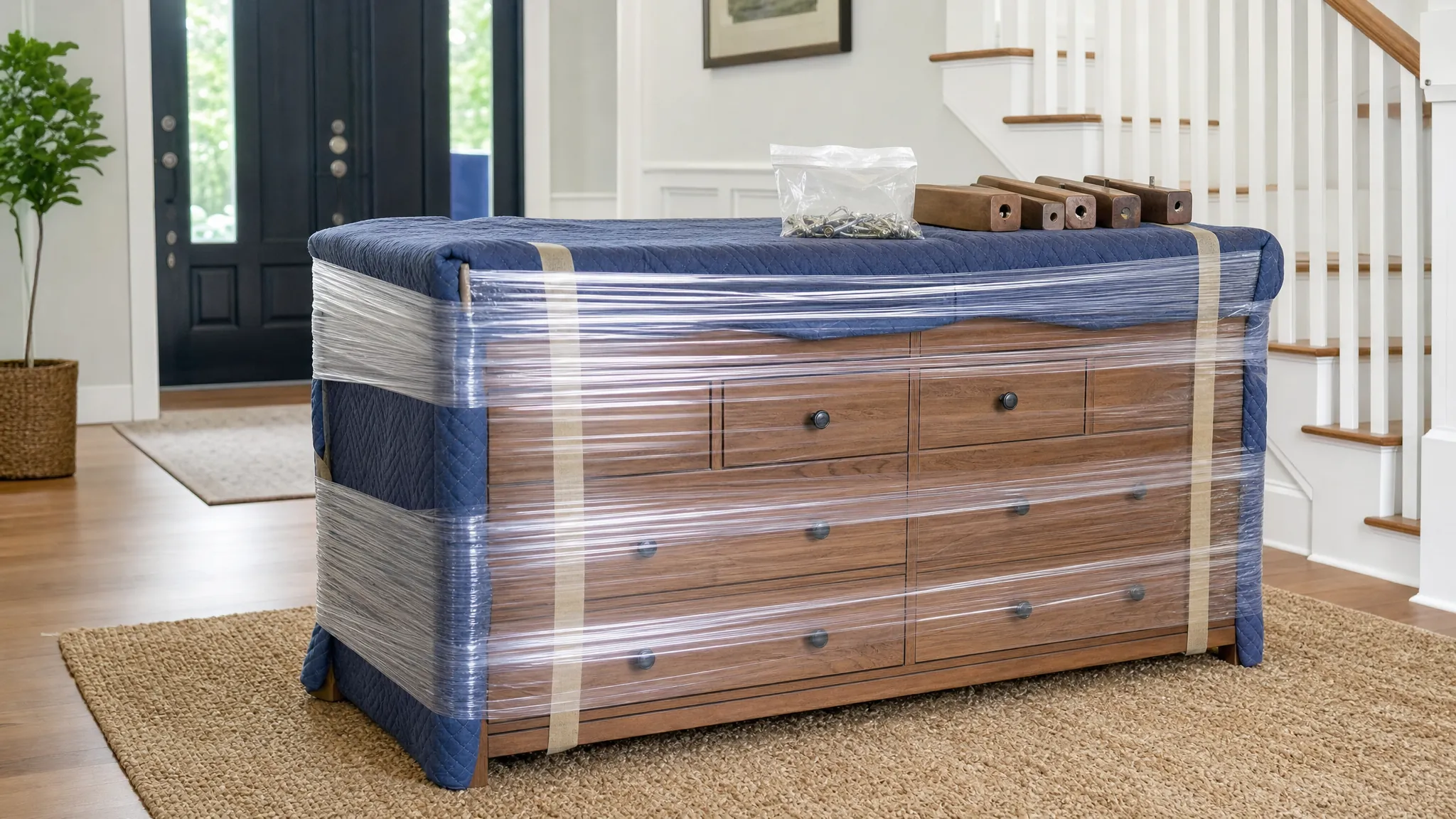
Not every item needs the same level of packing. Wrap fragile pieces individually, fill empty space in boxes so contents cannot shift, and use smaller boxes for dense items such as books. Avoid making one oversized box so heavy that nobody can safely lift it. For lamps, electronics, and furniture with removable parts, put hardware in a sealed bag and tape it to the item or label it clearly.
Take a few quick photos of electronics before unplugging them, especially if cables are complicated. Put screws, remote controls, and cords with the item they belong to. If you are not comfortable moving larger pieces, artwork, or fragile items yourself, professional packing support can focus on those tougher areas while you handle the straightforward boxes.
For an interstate move, it is also worth reviewing the U.S. Department of Transportation's consumer moving resources before choosing a company. Planning the packing order is important, but knowing what questions to ask is just as useful.
How Get Moving can help when the list gets long
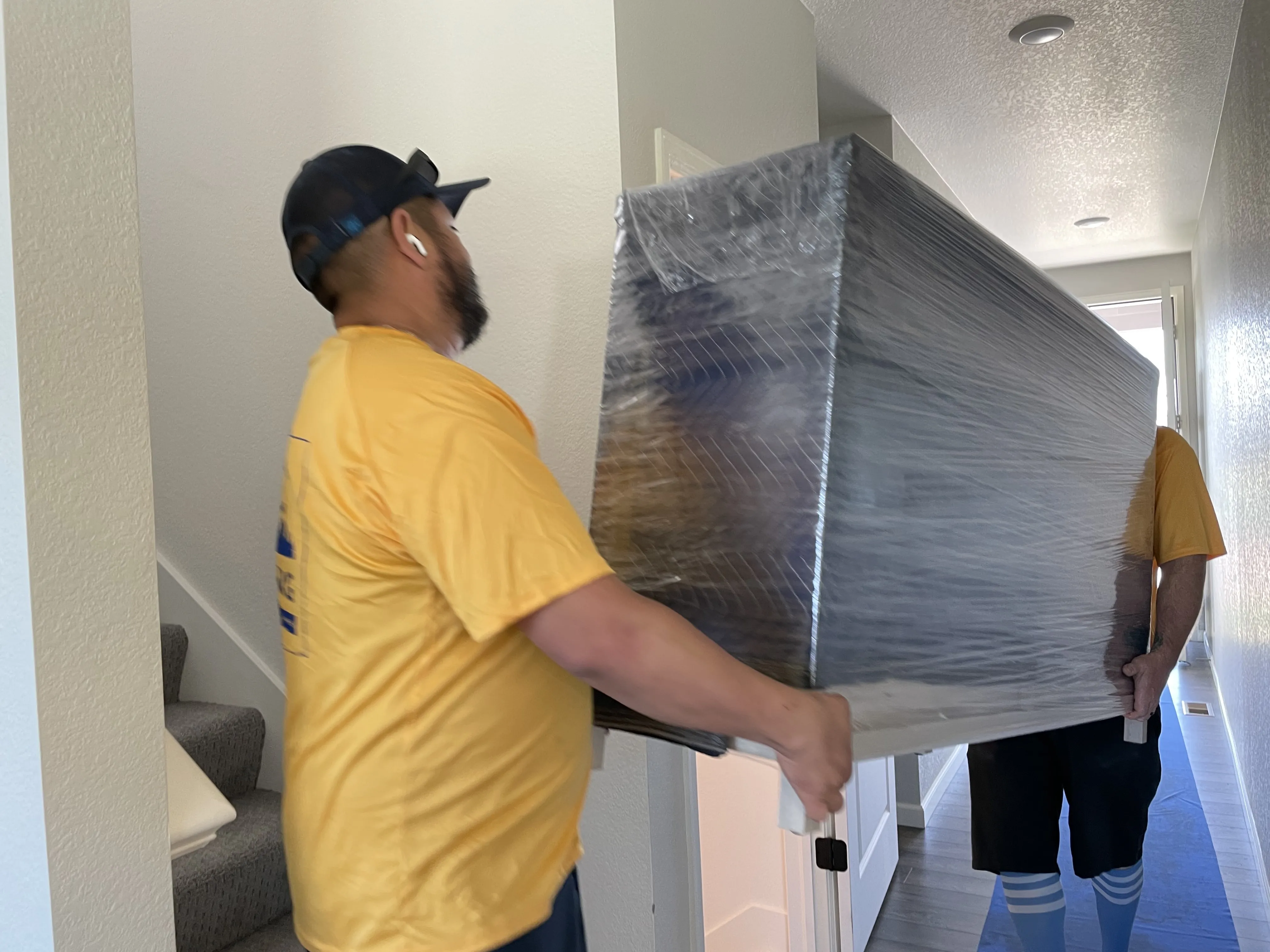
You do not have to choose between doing everything yourself and handing off the entire move. Get Moving can provide full or partial packing for the rooms, fragile items, or time-consuming categories you would rather not tackle alone. The crew can also help with loading and unloading if you are using a rental truck, storage unit, or portable container.
For a full local move, the local moving team can handle the heavy work from loading through unloading. Start with a free estimate request, explain what is already packed and what still needs attention, and get a plan that fits your date and the help you actually need.
Frequently asked questions
What should I pack first when moving?
Start with things you will not need before the move: seasonal clothes, decorations, books, extra linens, spare furniture, storage items, and rarely used kitchen gear. These boxes create early progress without interrupting your normal routine.
How soon should I start packing for a move?
Start as soon as you know the move is happening. Even if the date is weeks away, packing a few low-use items at a time keeps the final week from becoming a rushed sorting project.
What should stay unpacked until moving day?
Keep medications, important documents, chargers, keys, toiletries, basic cleaning supplies, a few dishes, and enough clothing for several days out of the moving boxes. Put them in a clearly separate essentials box or bag.
Should I pack everything before movers arrive?
That depends on the service you choose. A moving crew can handle the loading and transport, while professional packing can take care of all or part of the boxing process. Share what is already packed when you request an estimate so the plan matches the work left to do.