
Start packing for a move as soon as the move is real, but do not try to pack your entire home in one weekend. The best time to begin is usually six weeks before moving day, or earlier if you have a larger home, a packed garage, a busy calendar, or rooms that have not been sorted in years.
A good packing timeline does two things at once. It clears the things you can live without, and it protects the routines that keep your household running. You should still be able to make dinner, find the school supplies, work from home, and sleep in your own bed until the move is close.
Start earlier than you think when the house has hidden work
Six weeks is a useful working timeline, not a rule that fits every home. Start earlier when you have a large garage, a basement, multiple storage areas, a workshop, a home office full of files, young children, pets, or a move that has to happen around work and school. The point is not to create more stress. It is to give yourself enough time to make a decision about each item before it becomes a last-minute box.
Even if your move is two or three months away, you can begin with the categories that will not disrupt daily life: out-of-season clothes, holiday decor, extra furniture, books, keepsakes, duplicate kitchen tools, and items tucked into the backs of closets. Those early boxes create space and make the actual packing feel smaller.
Before you buy supplies, do a quick walk-through. Identify the rooms that are easy, the rooms that will take time, and the things you may donate, sell, recycle, or move separately. It is much easier to estimate the work once you see the whole home as a series of small areas instead of one overwhelming project.
Your six-week packing timeline
Use this plan as a starting point, then adjust it to your home and move date. A two-bedroom apartment may move through it faster. A family home with a garage, storage unit, and packed kitchen may need more time. The order matters more than the exact number of boxes you finish each week.
Six weeks out: clear storage and make the big decisions
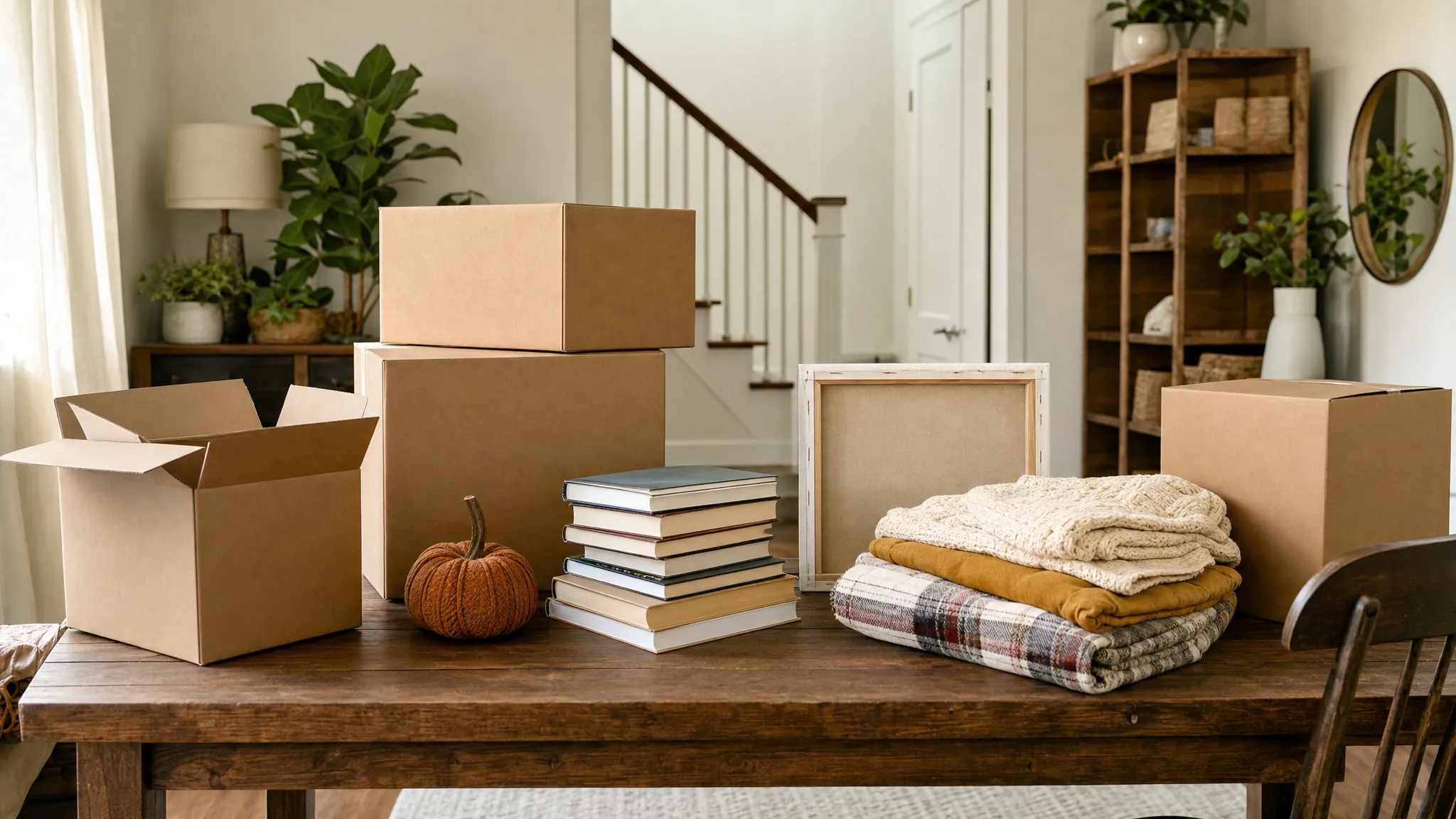
Begin in the spaces you rarely open: the attic, basement, garage, shed, utility closet, cabinets above the refrigerator, and the back of each closet. Pack holiday decor, camping equipment, extra bedding, sports gear, old files you need to keep, books, wall art, and anything that has been sitting in storage.
This is also the best week for decisions. Set up simple piles for keep, donate, recycle, and discard. Do not spend an hour deciding whether to keep every small thing. Make a reasonable call, pack what stays, and keep moving. Fewer items going into the new home means fewer items to load, unload, and put away later.
Five weeks out: work through low-use rooms
Move to guest rooms, formal dining spaces, extra bathrooms, decor, hobby supplies, and any room your household can mostly close off. Pack backup towels, spare sheets, out-of-season shoes, extra toiletries, reference books, archived papers, and duplicate electronics.
Keep one useful set of everyday items out. You do not need three sets of sheets, every coffee mug, or every serving dish during the final month. A little restraint here keeps the home usable while still giving you a steady stream of finished boxes.

Four weeks out: start rooms that need sorting
Four weeks out is a good time to tackle the kitchen, home office, garage, and children's rooms in stages. Do not pack the whole kitchen yet. Start with specialty appliances, extra dishes, cookbooks, serving pieces, and pantry items you will not use. In the home office, pack old files, spare supplies, and books, but keep current work, school materials, and chargers accessible.
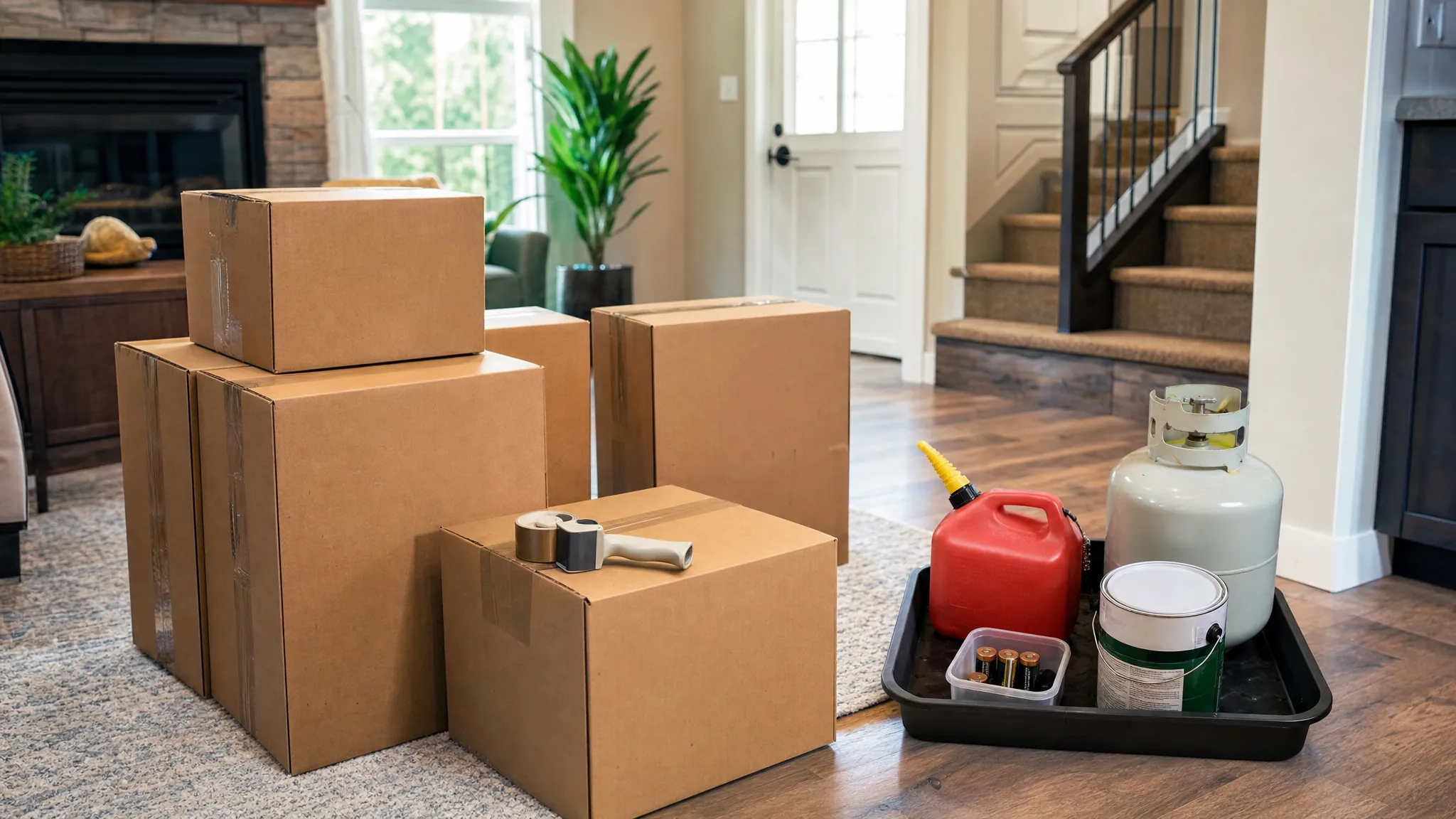
Garages and utility spaces need a slower approach because they tend to collect small parts, old projects, and products that do not belong on a moving truck. Set aside paint, fuel, propane cylinders, batteries, cleaners, pesticides, and other products that need a separate plan. The Larimer County household hazardous waste guidance can help Northern Colorado households check current drop-off details before moving day.
Three weeks out: confirm the moving plan and pack most extras
By now, most low-use spaces should be finished. Use this week to confirm what furniture is moving, what is staying behind, and what needs extra care. Measure unusually large pieces, note tight stairways or elevator rules, and make sure you have a clear plan for storage units, rental trucks, or portable containers.
This is also the right time to schedule the things outside the boxes. Set up mail forwarding through the USPS change-of-address service, update the address on accounts that matter, and gather the documents you will want to keep with you. Colorado residents can also review the state's driver license and vehicle address update options before the move gets busy.
If the packing list is still long, this is the moment to bring in help. Get Moving's full and partial packing service can take on an entire home, fragile belongings, a kitchen, a garage, or the rooms that are slowing you down most.
Two weeks out: pack around your daily routine
At two weeks, pack most of the clothing you will not wear, extra linens, decor, books, wall art, hobby gear, and duplicate kitchen tools. Reduce the kitchen to the basics you need for simple meals. Keep a small number of plates, cups, pans, and utensils, then pack the rest.
Finish the rooms that can be closed off and label every box with both the room and a short contents note. “Kitchen” is helpful. “Kitchen, baking pans and mixer” is much better when you are trying to find one thing in the new home. Write on at least two sides so the label stays visible after boxes are stacked.
One week out: prepare the first night and the first morning
During the final week, finish the nonessential parts of bedrooms, bathrooms, and the kitchen. Pack most of your clothes, leaving enough for the days around the move. Use up food in the freezer and refrigerator where you can, and avoid buying more pantry items that will only need to be carried.
Make one clearly separate essentials tote or box for the first night: toilet paper, towels, bedding, basic toiletries, a phone charger, snacks, water, trash bags, paper towels, a small tool kit, and a few cleaning supplies. Your personal bag should hold keys, identification, important documents, medications, glasses, jewelry, and any small items you would not want out of sight.

One to two days out: finish without creating a scramble
Save the daily necessities for last: the final dishes, coffee setup, toiletries, chargers, bedding, pet supplies, and the clothes you are still wearing. Move room by room so you can see what is left. Check cabinets, drawers, laundry areas, closets, and outdoor spaces for the small things that are easy to miss.
Keep the essentials tote separate from the moving boxes and make sure everyone knows where it is. If it is going on the truck, load it last so it comes off early. This one small decision can spare you from opening ten boxes just to find a toothbrush, a light bulb, or the coffee maker.
If your move is sooner, use the same order
A short timeline does not mean you need a different plan. It means you need to be more selective. Start with storage, seasonal items, decor, and anything you can pack without changing the way your household functions. Then work toward the rooms you can close off. Leave daily clothing, basic meals, medications, documents, and first-night essentials for the end.
For a move that is only a week or two away, do not aim for a picture-perfect packing system. Focus on safe boxes, clear labels, and a visible plan for items that need special handling. Our guide to what not to pack when moving can help you separate hazardous, perishable, irreplaceable, and daily-use belongings before they accidentally get loaded.
Keep boxes from becoming a second project
Packing gets harder when every room becomes a staging area. Choose one place for spare boxes and supplies, such as a dining room corner, guest room, or section of the garage. Keep tape, markers, packing paper, and labels together. When a box is finished, move it out of the active work area so you can see what still needs attention.
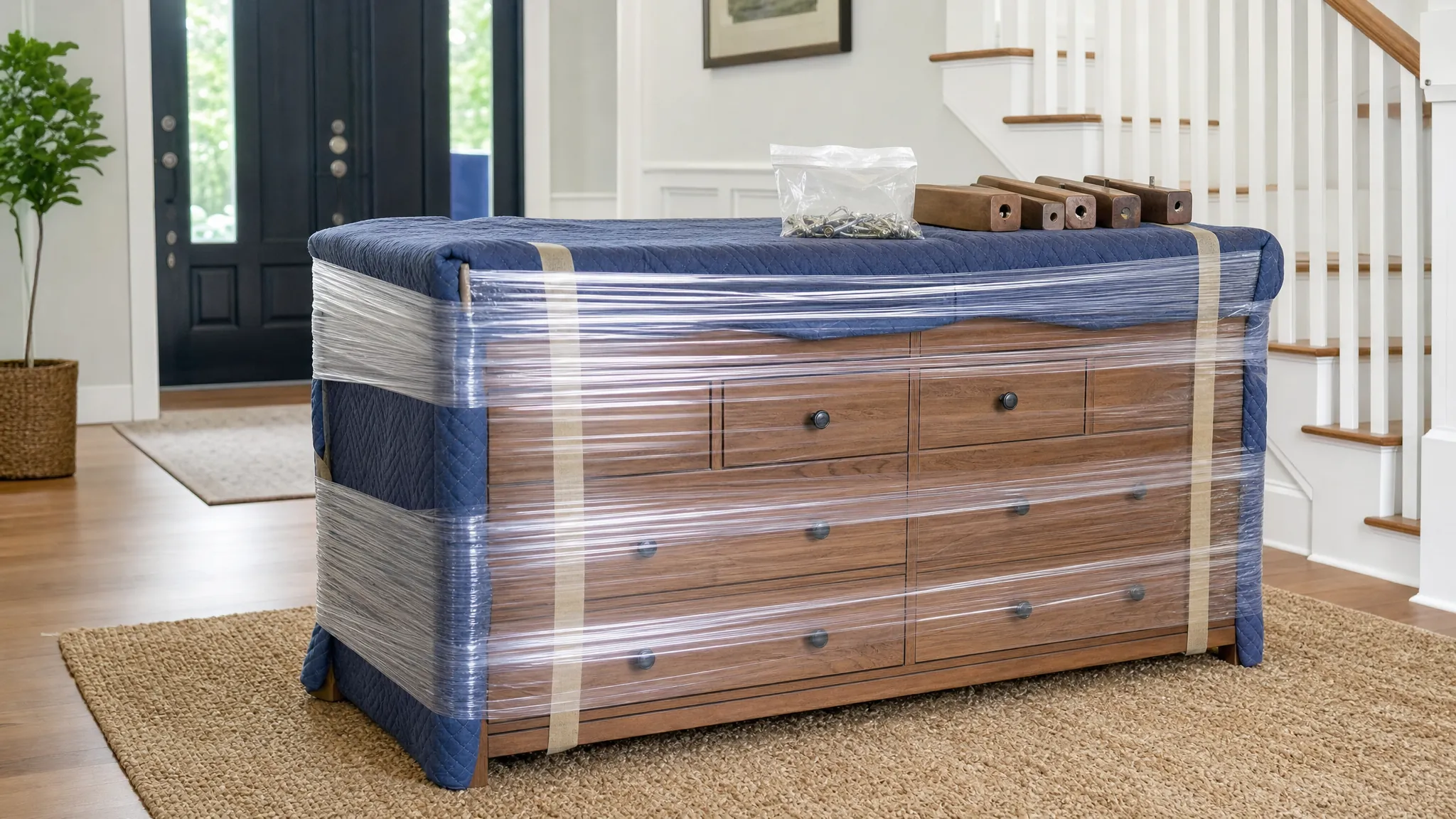
Use smaller boxes for heavy items such as books and tools. Wrap fragile items individually, fill empty space so contents cannot shift, and do not make a box so heavy that it is difficult to lift safely. For furniture, artwork, electronics, antiques, and awkward pieces, take a photo and raise the question before moving day. A little advance notice gives everyone time to plan the right approach.
Make the plan fit your real week
A packing timeline only works when it fits around your actual life. Instead of promising yourself an entire Saturday, choose a small target for each session: one shelf, one closet, one cabinet, or one category. Thirty focused minutes after dinner can be more useful than a big weekend plan that never quite starts.
Put the harder rooms on the calendar before the final week. Kitchens, garages, storage areas, kids' rooms, and home offices often take longer because they involve more decisions. If you have help from family or friends, give each person one clear job such as sorting books, labeling boxes, wrapping dishes, or setting aside donations. A shared plan beats several people opening different closets and creating more piles.
It also helps to leave a little room for the unexpected: a busy workday, a sick child, a delayed delivery of boxes, or the realization that a storage area is much fuller than you remembered. Finishing the nonessential work early gives you that breathing room. Then moving day can focus on the move itself instead of the packing you meant to finish the night before.
How Get Moving can help with the work ahead
You do not have to choose between packing every item yourself and handing off the entire move. Get Moving can help with full or partial packing for the rooms, fragile belongings, or time-consuming categories you would rather not manage alone. The crew can also handle local residential moving once the home is ready, or provide loading and unloading help for a rental truck, portable container, or storage unit.
For interstate moves, the U.S. Department of Transportation's consumer moving resources are a useful reminder to check the company and plan before you book. For a Northern Colorado move, start with a free estimate request, share your timeline and the rooms that still need attention, and build the right level of help around the work that is actually left.
Frequently asked questions
When should I start packing for a move?
Start as soon as your move is certain, even if you have several weeks. Begin with storage areas, seasonal belongings, decor, and other things you can live without. That gives you time to make decisions without turning the final week into a rushed sorting project.
Is six weeks enough time to pack for a move?
Six weeks is enough for many households when you work in small, regular sessions and start with low-use items. Larger homes, packed garages, specialty collections, and busy schedules may need more time or focused packing help for the rooms that take the longest.
What should I pack two weeks before moving?
At the two-week point, pack most of the rooms you use less often, extra linens, seasonal clothing, books, decor, wall art, hobby supplies, and duplicate kitchen items. Keep your core clothes, toiletries, kitchen basics, medications, and important documents accessible.
What should I leave until the last week before moving?
Save daily clothing, basic cookware, toiletries, chargers, bedding, pet supplies, and the items your household needs every day. Put first-night essentials in a clearly separate tote or box so they do not disappear into the moving truck.