A refrigerator looks like a simple rectangle, but it is heavy, top-heavy, awkward around corners, and full of components that do not love being bounced or laid down. A rushed move can scratch floors, damage a door frame, strain someone’s back, or leave the appliance leaking water at the new home.
The useful way to think about moving a refrigerator is as a sequence: prepare the appliance, measure the route, protect the home, move it with the right equipment, secure it upright for transport, then give it the time its own manufacturer recommends before restarting. If any step feels shaky, stop before the appliance starts moving.
Start with the appliance manual, not the dolly
Before planning the route, locate the owner manual for the exact refrigerator model. It can tell you whether the doors, shelves, ice bin, water line, or leveling feet need particular preparation. It also gives the most reliable answer about what the appliance needs after transport. A general moving tip is useful, but it should never override the instructions for the refrigerator in front of you.
Manufacturer advice is consistent on one main point: upright transport is the safest plan. LG explains that moving a refrigerator upright helps avoid compressor-oil problems, and that a refrigerator transported on its side needs an upright rest before power is restored. Read LG’s refrigerator transport guidance alongside your own manual if you need a second reference.
If the refrigerator is built into cabinetry, has an ice maker, or has a water dispenser, do not guess at the disconnect. Plan enough time to follow the manufacturer’s steps and to dry the water line area.
Make a route plan before it comes out
Measure the refrigerator’s height, width, and depth, including handles when they cannot be removed. Then measure the narrowest doors, hallways, turns, elevator openings, exterior steps, and the truck opening. Pay special attention to the turn from the kitchen into the hall. A refrigerator that clears a doorway can still fail to make the turn immediately after it.
Clear rugs, small tables, pet bowls, wall art near tight corners, and anything else that narrows the route. Protect hardwood, tile, and soft flooring before the appliance moves. The route should have a clear place for each person to stand, not just enough room for the refrigerator itself. Home Depot’s refrigerator moving guide also starts with measuring the appliance and the path, which prevents many expensive surprises.
Decide in advance how you will handle stairs, ramps, snow, wet pavement, steep driveways, and narrow landings. Those conditions change the job. If a route includes stairs or a difficult exterior carry, a full-service crew is usually a better call than treating the move as a two-person favor.
Empty, unplug, defrost, and dry it ahead of time
Start the refrigerator preparation early enough that you do not have to rush it. Move food you are keeping into coolers or a temporary refrigerator, then unplug the appliance according to the manual. Remove ice, allow frost to melt, and wipe the interior completely dry. A wet refrigerator turns a moving truck into a slippery workplace and can leave odors behind once the doors are closed.
Take out loose glass shelves, bins, and drawers when the manual allows. Wrap them separately and label them for the refrigerator. They are much less likely to crack in a small box with padding than while rattling inside the appliance. Tape or secure the power cord against the back so it cannot drag, snag, or get caught under the dolly.
For a water line, shut off the supply and follow your model’s instructions for disconnecting and draining it. Do not leave a loose line or a drip tray full of water for the loading crew to discover halfway through the move.
Use the right equipment and enough capable help
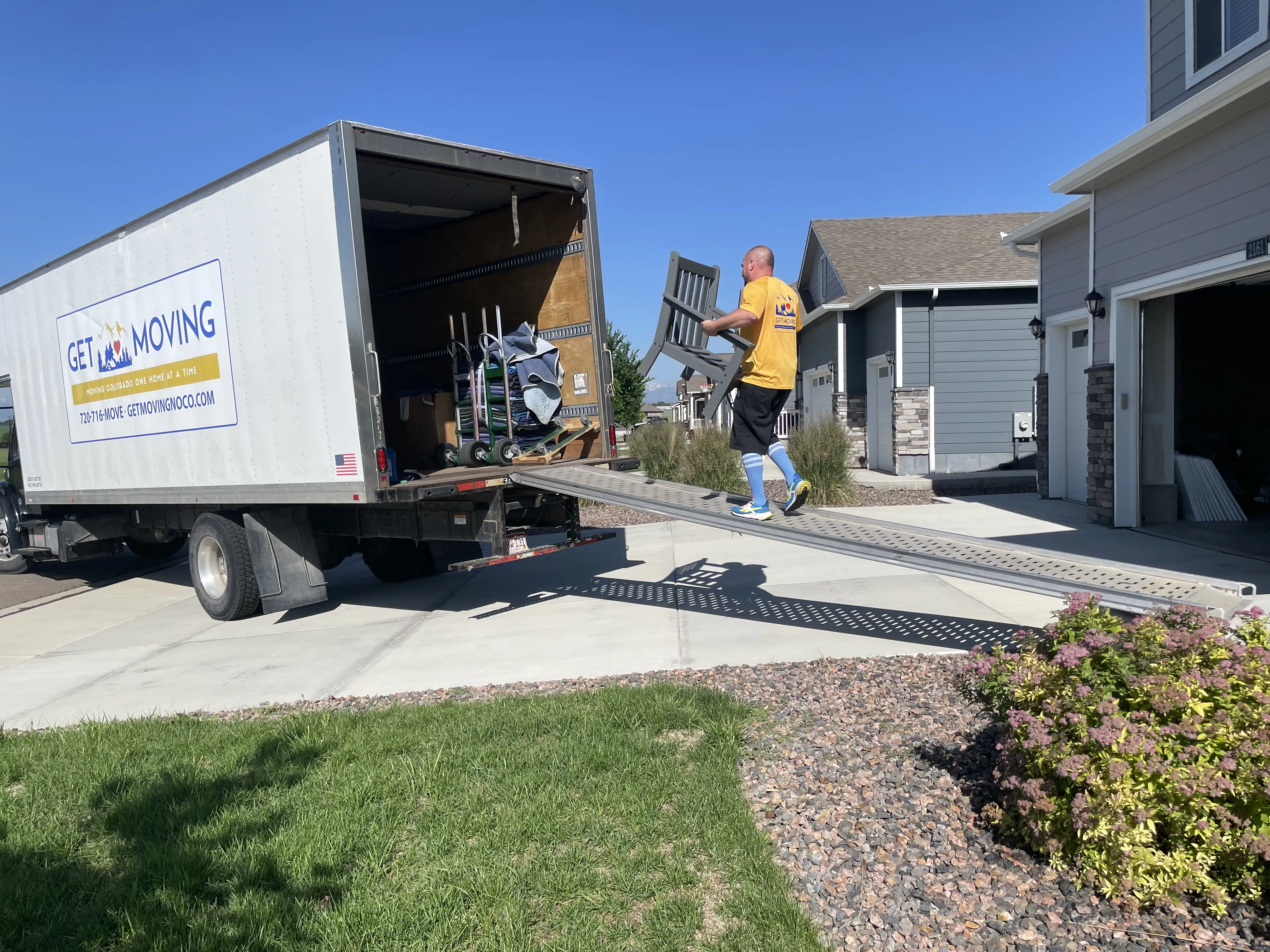
A refrigerator is not a one-person lift. Use an appliance dolly rated for the job, with a strap designed to keep the load attached to the dolly. Bring moving blankets, floor protection, and a vehicle where the appliance can be secured upright. The dolly is not just about weight. It gives the crew a controlled way to roll, tilt, and steer an item that is too tall and bulky to carry safely by hand.
Have at least one person guiding and one person controlling the dolly, with more help when the route requires it. Establish simple calls before moving: stop, left, right, clear, and down. Keep hands away from pinch points at door frames and under the appliance. Do not use refrigerator handles as lifting points.
When using a dolly, follow the equipment instructions. Lowe’s notes that many refrigerators can be very heavy and that an appliance move should not be treated as a solo job. Its step-by-step refrigerator guide is a useful equipment checklist before moving day.
Protect the doors, finish, and floors before rolling
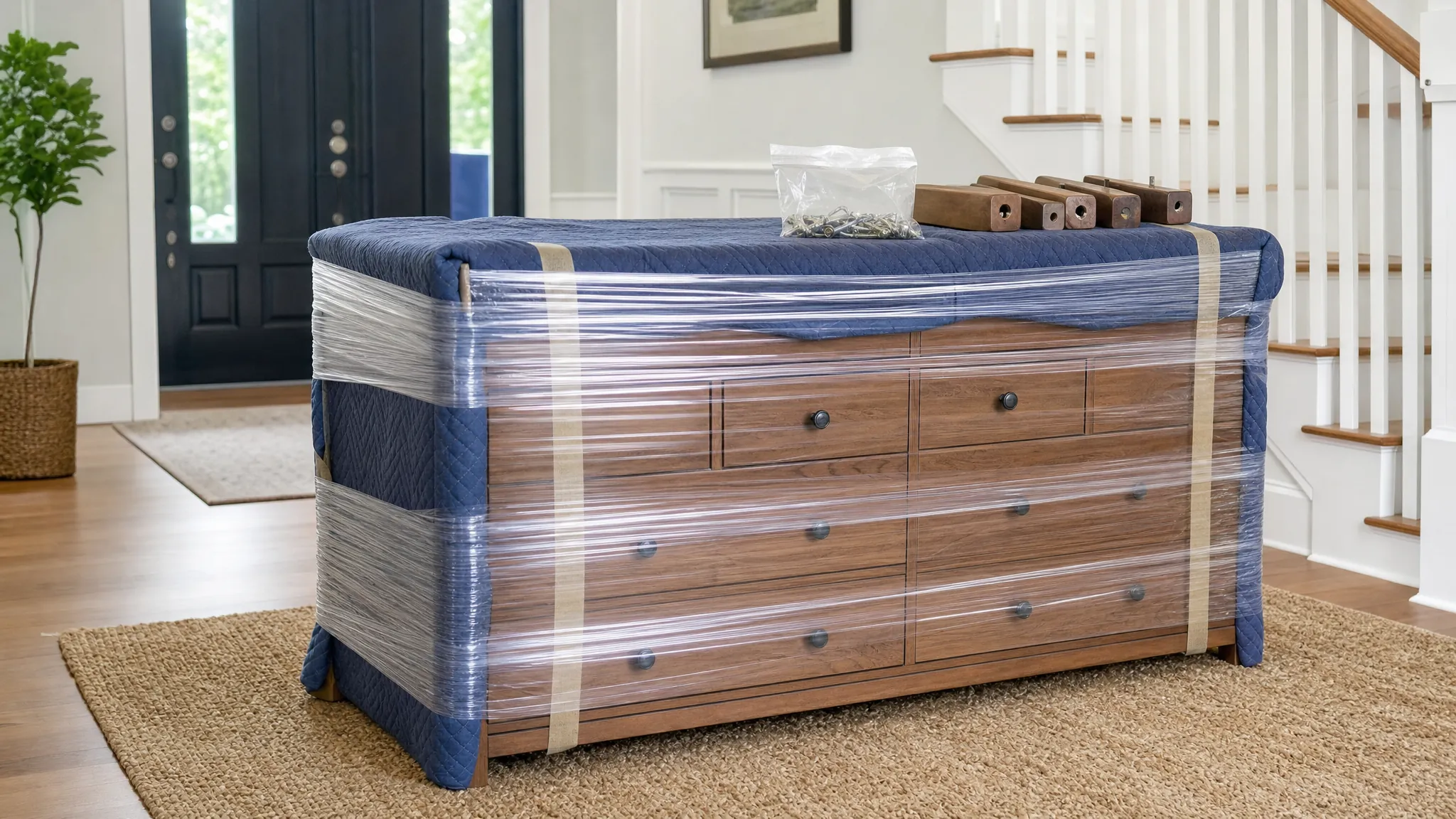
Secure the refrigerator doors so they cannot swing open at a corner or on a ramp. Use a method that will not damage the finish or leave sticky residue. Wrap the appliance in moving blankets, paying attention to corners, handles, and the back where the cord and connections sit. The wrap protects both the appliance and the home if you brush a door frame.
Use floor runners, furniture sliders, or other appropriate protection on finished surfaces before the refrigerator starts moving. Do not drag the appliance across hardwood or tile just because it has wheels. Keep the path clear of boxes and use a spotter at difficult turns. Slow is faster here.
Move through doorways, ramps, and stairs deliberately
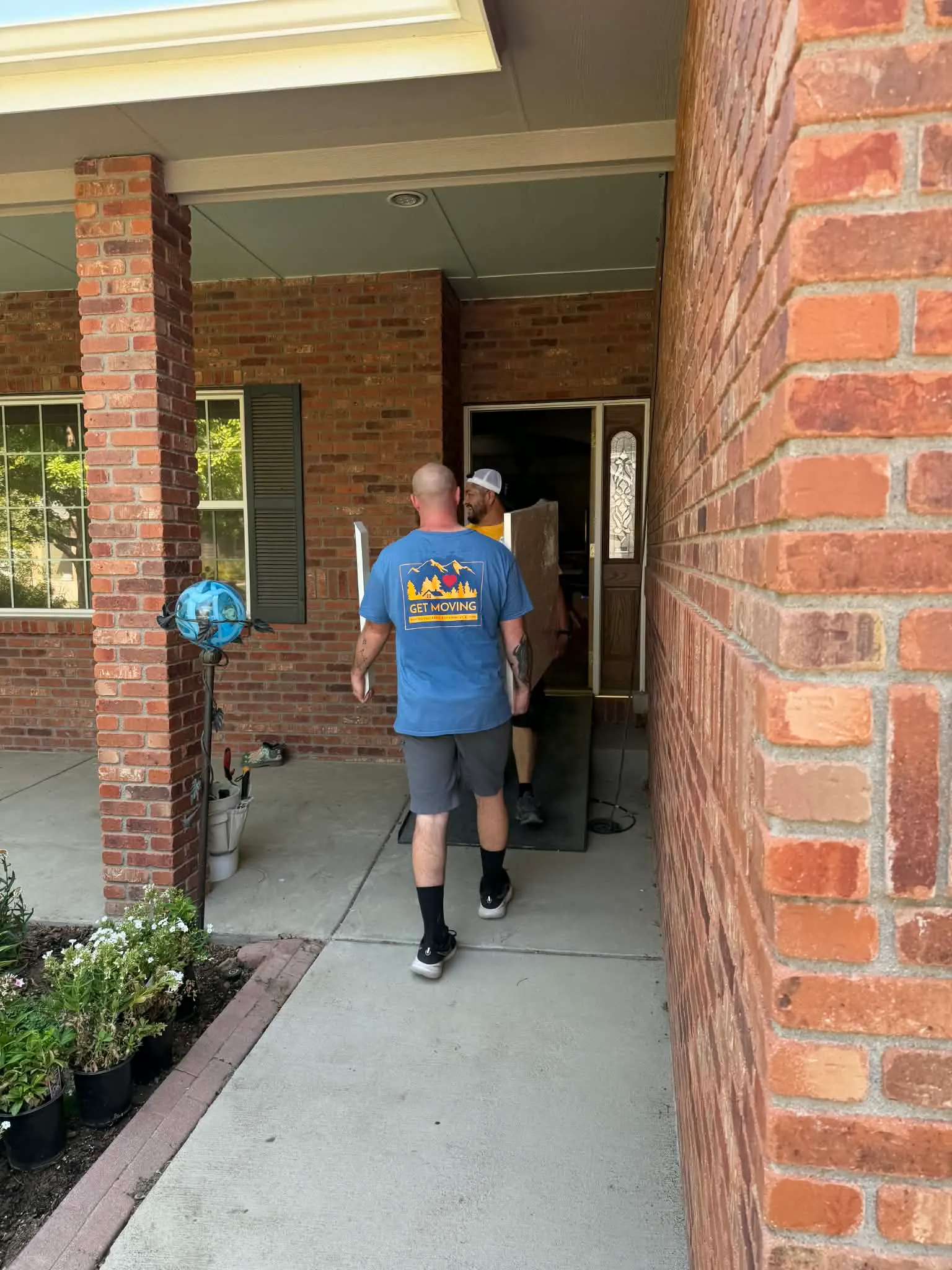
At a doorway, keep the refrigerator centered in the opening and let the person guiding the front call the clearance. Do not force a tight fit against the trim. If you measured correctly but the appliance will not pass, stop and reassess whether the handles, doors, or route need a different plan.
Ramps deserve extra caution because the load can gain momentum. Keep control at the downhill side, work one small movement at a time, and never rely on a strap alone to hold a refrigerator on an incline. Stairs are the point where many do-it-yourself plans should change. A heavy appliance on a dolly has a high center of gravity, and a short stair run can become difficult fast.
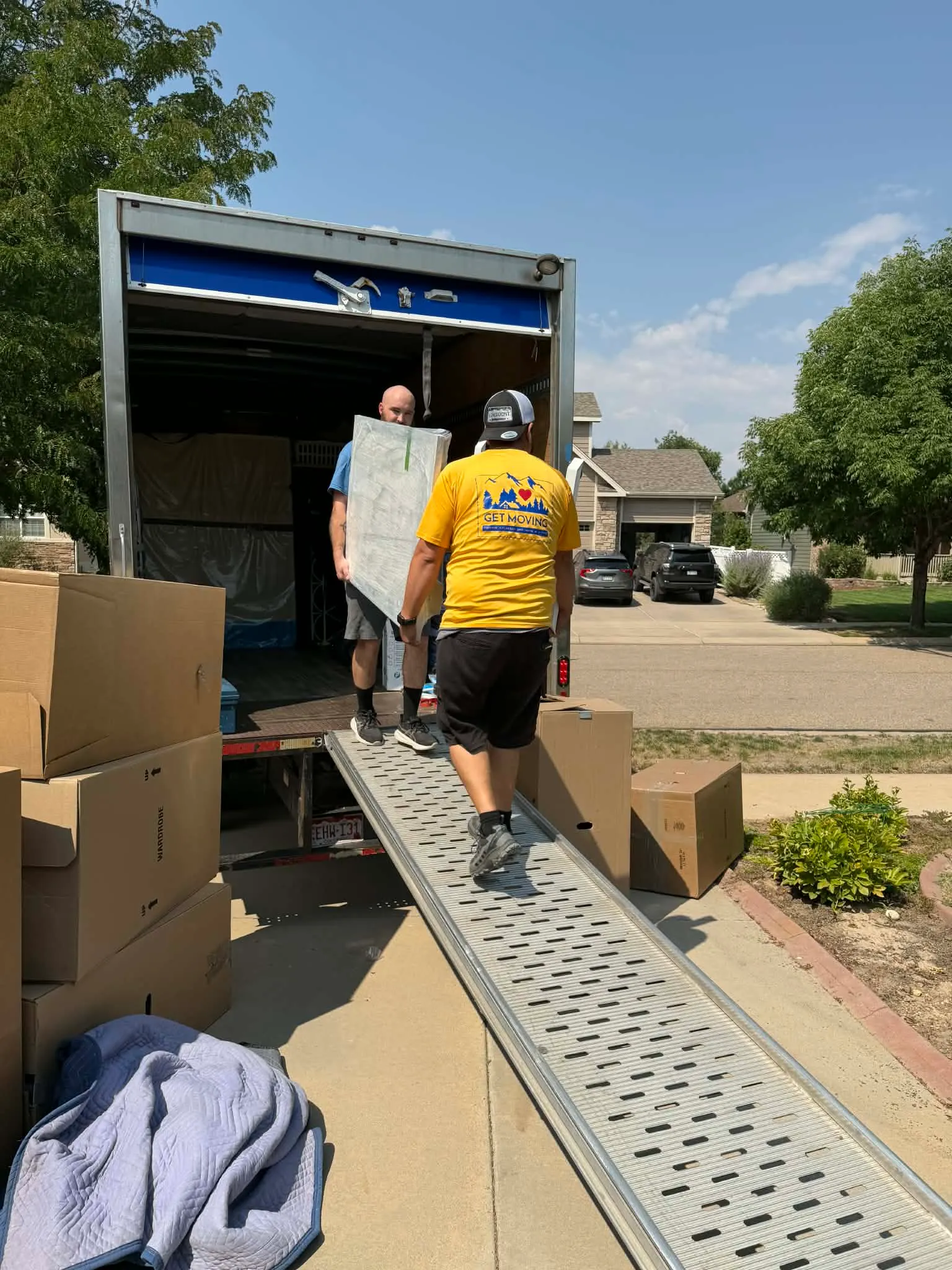
Secure it upright for the drive
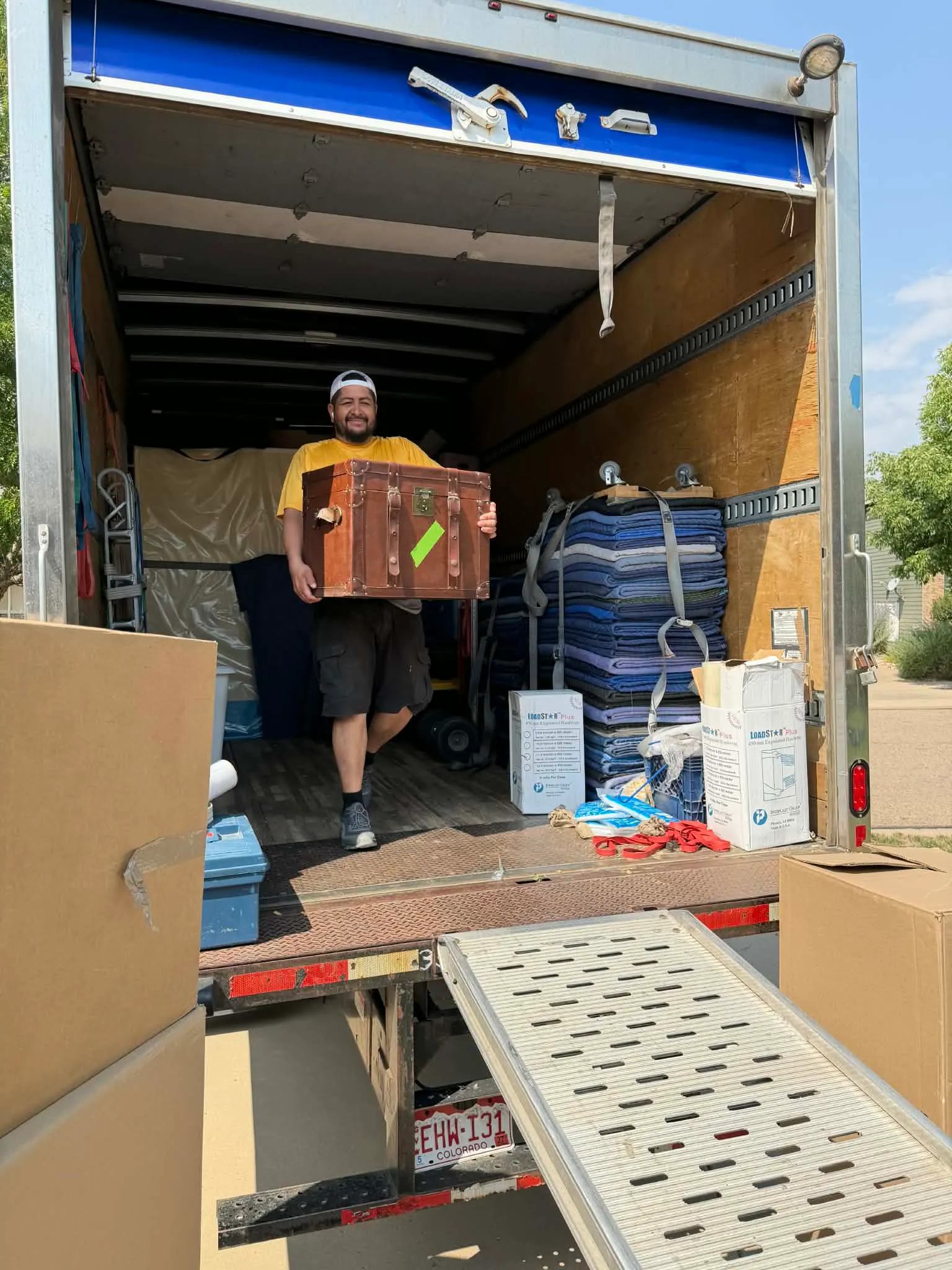
In the vehicle, keep the refrigerator upright whenever possible and secure it to a solid tie-down point so it cannot slide, tip, or contact loose furniture. Blankets protect the finish, but they do not secure the load. Use rated straps or the truck’s tie rails, and build the rest of the load so nothing can shift into the refrigerator during braking or turns.
If upright transport is genuinely impossible, pause and check the manual for that model rather than relying on a universal internet rule. The restart wait can vary. GE Appliances, for example, says a refrigerator transported on its side should stand upright for at least as long as it was on its side before it is plugged in. See GE’s moving instructions for that model-specific example.
Set it in place, then wait before restarting
At the new home, use the same deliberate approach in reverse. Bring the refrigerator into the kitchen, remove the blankets, position it without scraping the floor, and reconnect any parts according to the manual. Make sure it is level before loading food back inside.
Before plugging it in, follow the model’s transport instructions. If it was kept upright throughout the move, some models may allow a short wait. If it was tipped or laid down, the refrigerator may need more time standing upright for internal fluids to settle. Do not let the pressure of unpacking make that decision for you.
Do a final check before the refrigerator moves
Pause at the doorway before the appliance leaves the kitchen. Confirm that the refrigerator is empty, dry, unplugged, and free of loose shelves or bins. Check that the doors are secured, the cord is protected, the route is clear, and the dolly strap is snug against the body of the appliance. Everyone helping should know where the refrigerator is headed and where they will stop if the path becomes difficult.
At the truck, repeat the same check. The appliance should have a stable upright position, a real tie-down point, and no loose boxes that can press against it. If the day has already become rushed, that is a reason to slow down, not a reason to skip the checks. A refrigerator can be replaced. A person’s hands, back, or footing are harder to recover from.
When professional moving help is the sensible choice
Professional help is especially useful when the refrigerator is large, the home has stairs, the route includes a tight turn, the appliance needs to be moved with other heavy furniture, or you are already coordinating a complete household move. The advantage is not just muscle. It is having a crew, proper equipment, protective materials, and a plan for the sequence of the load.
It also gives you one person responsible for coordinating the difficult moments instead of asking a friend to make a judgment call while holding a heavy appliance. That extra planning matters most on unfamiliar stairways, busy move-in days, and homes where one tight turn decides whether the appliance can travel safely.
Get Moving can handle complete Northern Colorado household moves, careful furniture and heavy-item moving, and loading or unloading help when you already have the truck. For an estimate, share the appliance size, both addresses, stairs, narrow access points, and any water-line or timing details when you request a free estimate.
Frequently asked questions
Can you move a refrigerator by yourself?
It is safer to have at least one capable helper and the correct appliance dolly. Refrigerators are heavy, tall, and difficult to control through doorways, on ramps, and near stairs. If the route is tight, steep, or unfamiliar, professional help is the lower-risk option.
How long should a refrigerator be off before moving?
Plan to empty, unplug, defrost, and dry it at least the day before the move when possible. The appliance instructions for your model should guide the exact preparation, especially if it has an ice maker or water line.
Can a refrigerator be transported on its side?
Keep it upright whenever possible. If your specific model must be laid down briefly, follow its owner manual and let it stand upright before restarting it. Manufacturer guidance varies, so there is no universal restart time that replaces the instructions for your refrigerator.
What equipment is best for moving a refrigerator?
An appliance dolly with a rated strap, moving blankets, floor protection, a helper, and a vehicle where the refrigerator can be secured upright are the basics.