A storage unit can solve a short gap between homes, make room during a renovation, or hold belongings while you sort out the next step. It can also become an expensive wall of boxes if everything goes in without a plan. The goal is not to pack every square foot as quickly as possible. It is to make the unit stable, protect the things you care about, and keep the belongings you may need within reach.
Start with the reason you are using storage
Before buying boxes or reserving a truck, decide whether the unit is for a few weeks, a season, or a longer stretch. A short transition between homes can be packed tightly when you know the unit will be emptied soon. A unit you expect to visit needs a clearer aisle and a more deliberate front-to-back layout.
Make a quick list of what is going in and mark three groups: items you may need soon, items you probably will not need until the unit is emptied, and items that need extra protection. That list is more useful than a vague room count. It tells you what belongs near the door, what can anchor the back wall, and what should stay out of the unit altogether.
Think about the exit at the same time. If you are storing belongings while waiting on a closing date, a renovation, or a lease start, decide which rooms will need to come out first. Keep those room labels together rather than scattering them through the unit. A little planning now means the first truckload to the new place can be useful instead of a random collection of boxes.

Check the unit and facility rules before loading
Measure the unit door, note the ceiling height, and make sure the access path is clear before the truck arrives. If the facility has an elevator, gate code, loading zone, or restricted move-in hours, confirm those details early. A furniture piece that fits inside the unit may still be difficult to turn through a narrow door or hallway.
Read the facility agreement for its prohibited items and access rules. Perishables, fuels, propane, corrosive products, and other hazardous materials are commonly restricted. Important documents, medication, cash, irreplaceable valuables, and anything you need in an emergency belong with you, not behind a storage lock.

Clean, dry, and empty items before they go inside
Storage keeps belongings out of the way, but it does not stop moisture, dust, or odors from becoming a problem. Wipe down furniture, let textiles dry completely, empty drawers, and drain appliances before they are packed. If a refrigerator or freezer is going into storage, follow the manufacturer and facility guidance, then leave the door slightly open once it is clean and dry so stale odors do not build up.
Take a minute to photograph the condition of larger pieces and note anything that already has a scratch or loose part. This is not busywork. It makes it easier to check items when they come out, and it helps you remember which hardware belongs with a bed frame, table, or shelving unit.

Use boxes that can carry weight safely
Uniform boxes stack more securely than a tower of random grocery cartons and loose bags. Put books, tools, and other dense items in smaller boxes so one person can lift them safely. Use larger boxes for lighter, bulky items such as pillows, linens, lampshades, and seasonal decorations. Fill empty space in fragile boxes so the contents cannot shift, but do not make a box so heavy that it bows or becomes unsafe to carry.
Label the top and at least two sides with a simple description, not just the room name. “Kitchen, everyday mugs and coffee supplies” tells you more than “kitchen.” Mark fragile boxes clearly and keep the writing facing the aisle you plan to leave. Public Storage also recommends labeling boxes, keeping an aisle open, and making a simple unit map, which is sensible advice when you know you will need something later.
Protect furniture and keep hardware with the piece
Remove only the parts that make a piece safer to move or easier to fit. Bed frames, table legs, shelving, and other removable pieces should be bundled together, labeled, and stored where they will not slide behind a stack. Put hardware in a sealed bag, label it with the furniture name, and tape the bag to the wrapped piece only when the tape will not touch a finished surface.
Use clean moving blankets, furniture pads, or cloth covers between wood, glass, metal, and upholstered pieces. Do not stack heavy boxes on sofas, chair arms, or delicate tabletops. Mirrors, glass shelves, and framed art need a protected edge and a stable place where they cannot be bumped every time someone reaches into the unit.
Load the back and walls first
Begin with the largest, heaviest, and least-needed belongings. Mattresses, dressers, bookcases, appliances, tables, and sturdy furniture generally belong along the back wall or sides, where they can create a stable boundary for the rest of the load. Keep furniture in a position that does not strain joints or doors, and avoid building a tall stack that can shift when one box is removed.
Then place the heaviest boxes low, building a firm base before lighter boxes go on top. The basic order is simple: heavy and durable below, lighter and fragile above. U-Haul’s storage guidance makes the same point and also recommends using the unit’s vertical space without sacrificing a safe access path.
Leave an aisle that matches how often you will visit
A packed unit is only useful if you can reach what you stored. For a unit you expect to visit, leave a clear walkway from the door toward the back or build one along a side wall. Put seasonal items, records, work supplies, or anything you may need in the next few months near that path. If you will not need anything until moving out, you can use a tighter layout, but still leave enough room to safely remove the first row.
Keep labels facing the aisle. Place a simple list or sketch near the door, then update it when you add or remove a major item. The map can be basic: front left, back right, shelf, and row numbers are enough. A clear layout keeps a quick retrieval from becoming an hour of shifting boxes.
Use vertical space carefully
Height helps, but only when the lower layers can support what is above them. Put solid, similarly sized boxes together and stop stacking when the base starts to bow or lean. Freestanding shelving can make small items easier to reach, but it should be stable and appropriate for the weight you place on it. Do not climb on an improvised tower of boxes to reach the top.
Large furniture can sometimes create useful protected space beneath or inside it, but do not force boxes into a drawer, appliance, or cabinet if doing so could damage the item or make it unsafe to move. Leave enough room around doors, drawers, and the unit entrance to remove items without dragging them across finished furniture.
Make the storage day easier on everyone
Pack one small tote for the storage day itself: keys, access code, water, phone charger, work gloves, tape, marker, basic tools, and the inventory list. Keep it in the cab of the truck or with the person coordinating the load, not inside the first stack of boxes. If another person is helping, agree on the basic plan before the first large piece goes in: what stays near the door, what goes along the back, and where the aisle will run.
If weather, distance, or facility rules limit your loading time, resist the urge to abandon the layout halfway through. It is better to pause, reset a wobbling stack, and protect furniture than to force a final row into place. A few minutes spent correcting the loading order are much cheaper than replacing something that was crushed, scratched, or made unreachable.
Plan the unload before you lock the door
Before leaving, stand at the entrance and look for leaning stacks, sharp corners, loose hardware, and items that could fall toward the door. Take a few phone photos of the finished layout and keep your inventory somewhere you can find later. The photos save time when you need one box months from now, and they make it easier to tell a helper exactly what should come out first.
When it is time to empty the unit, work from the top down and from the front toward the back. Clear a landing area outside the door before pulling out furniture or stacks of boxes. Do not try to catch a leaning load. Stop, make room, and reset the stack before continuing.
When storage loading help is worth it
Loading a storage unit is a good job for a capable crew when the load includes large furniture, heavy appliances, awkward stairs, a long carry, or a tight time window. A professional crew can handle the lifting and loading order while you focus on what stays, what goes, and what needs to remain accessible. That can be especially helpful when you are moving out of one home before the next is ready.
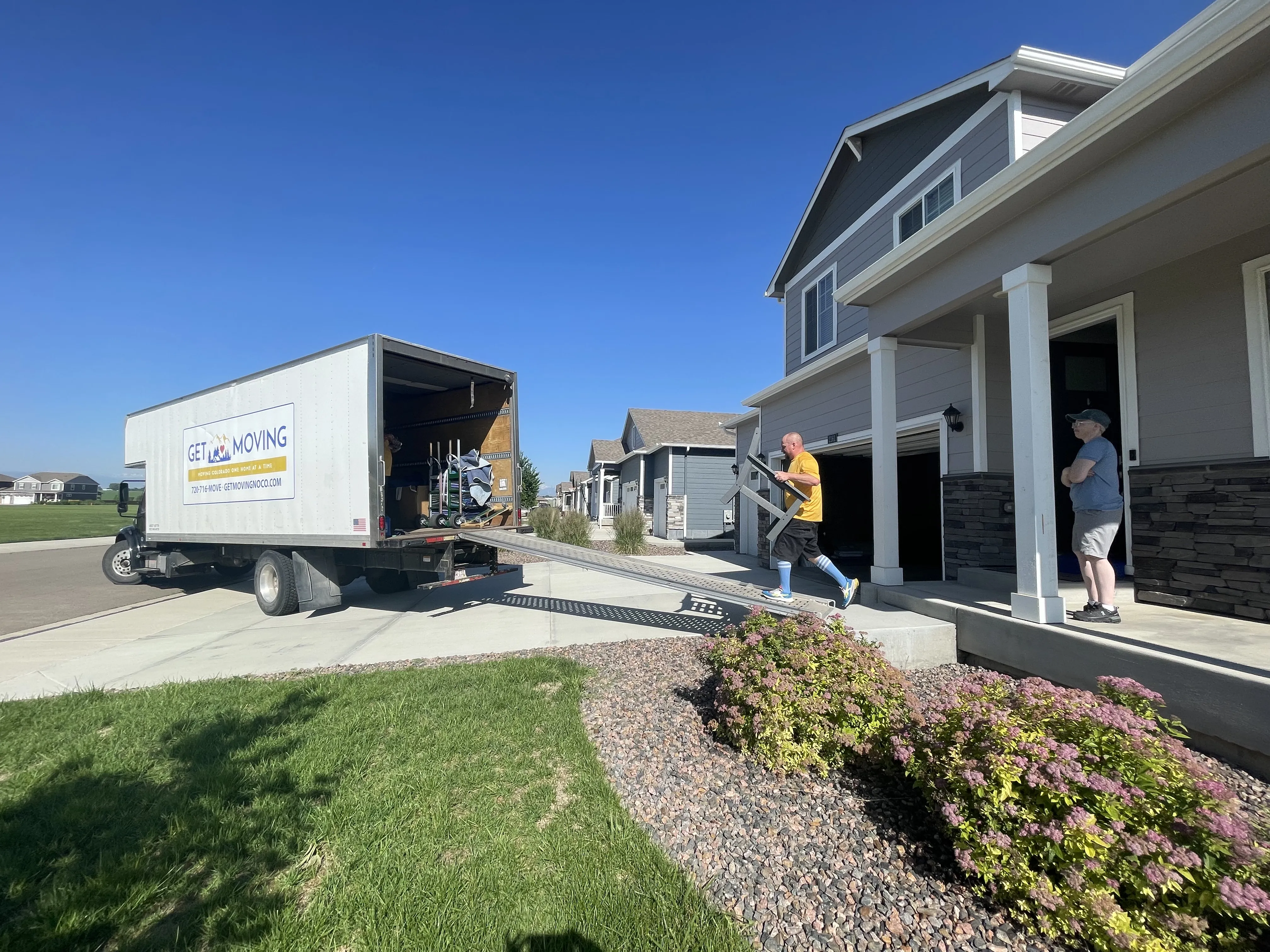
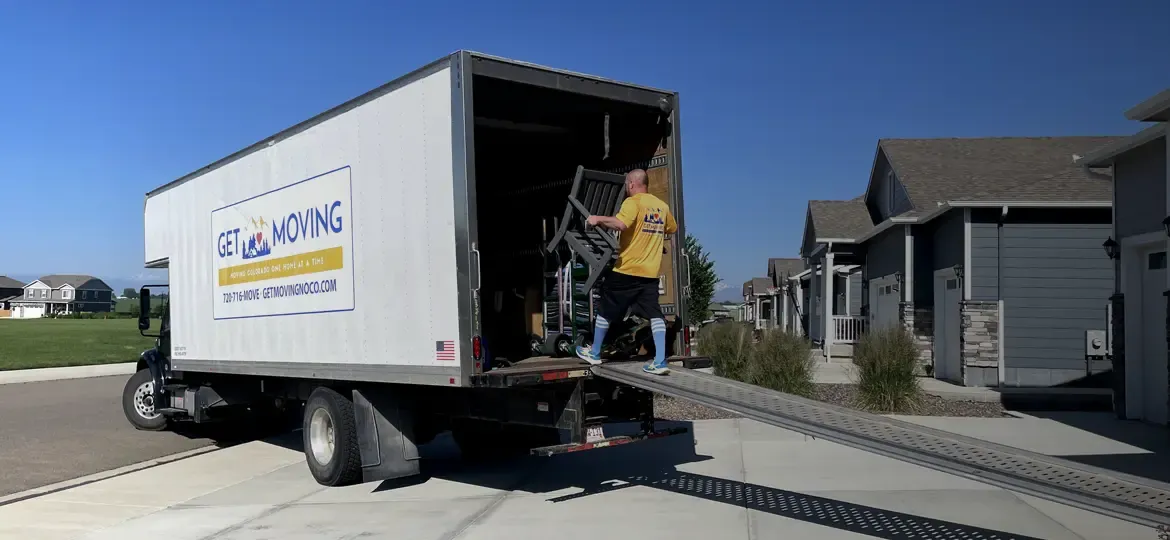
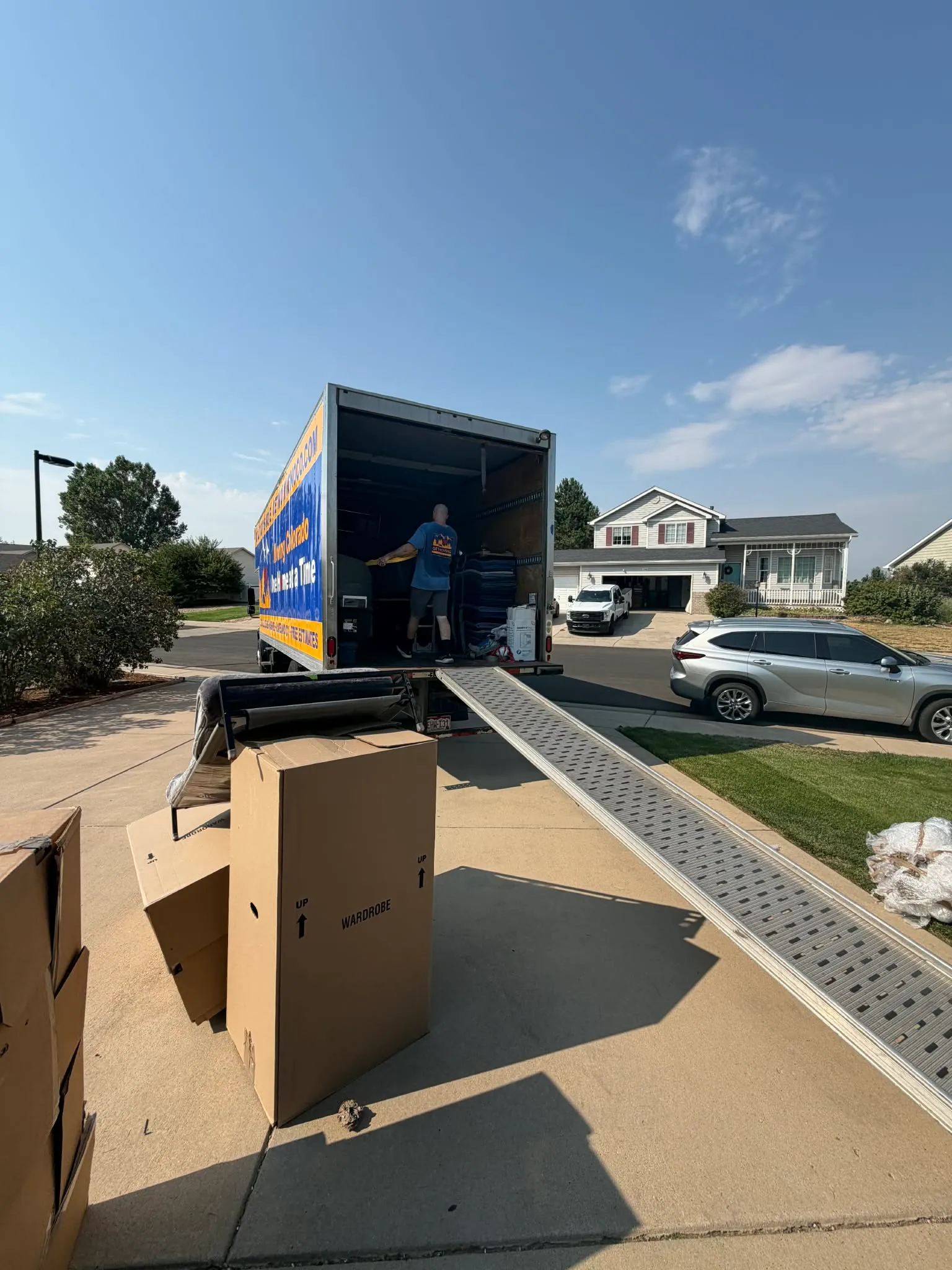
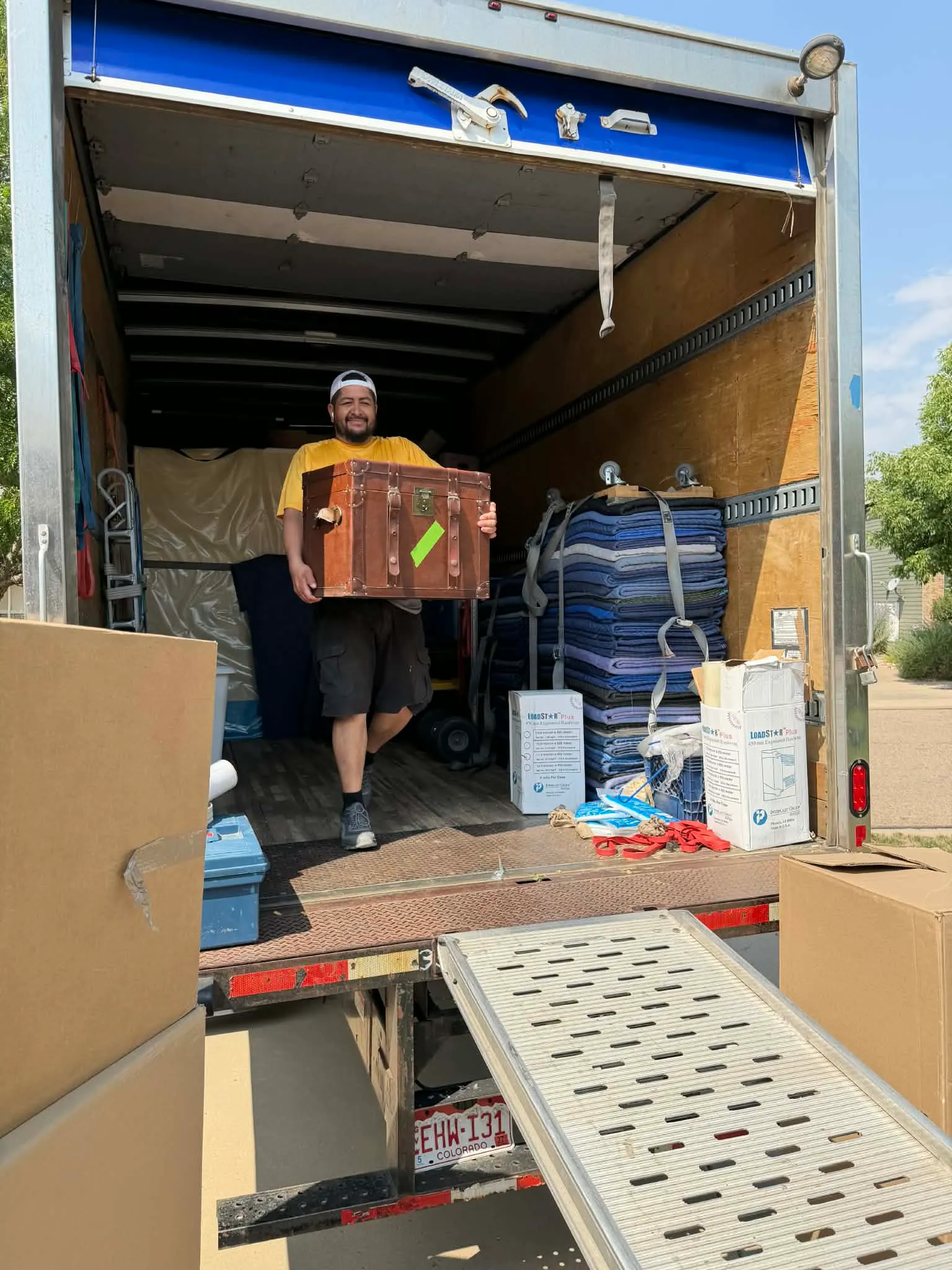
Get Moving helps Northern Colorado customers move belongings into or out of storage units, handle a storage stop during a local move, and load or unload a rental truck or container when the transportation is already arranged. Share the unit size, access details, major items, and whether you need transport as part of the estimate conversation.
Explore storage-unit moving help
See loading and unloading help for your own truck or container
How Get Moving can help
Get Moving can handle the demanding parts of a storage move, from packing and lifting to loading a storage unit, rental truck, or moving container. For a full move or focused storage help, use the estimate request form and share the unit size, access details, major furniture, and where the belongings need to go next.
Frequently asked questions
What is the best order for packing a storage unit?
Put large, heavy, least-needed items along the back and walls first. Build stable box stacks with heavy boxes at the bottom, then place lighter items above them. Keep a clear aisle and place the things you may need soon closer to the door.
Should I leave an aisle in a storage unit?
Yes, if you expect to retrieve belongings before moving out. A clear aisle lets you read labels and reach the back without taking the unit apart. If the unit is only a short-term bridge between homes, leave enough space to remove items safely from the front.
Can movers help load a storage unit?
Yes. Get Moving can load or unload a storage unit, help with a storage stop during a local move, or provide labor when you already have a rental truck or portable container.